
Most swirl marks and fine scratches on a car’s paint aren’t caused by bad luck. They’re caused by washing. Every time you drag a sponge across the paint with a bit of grit trapped in it, you’re essentially sanding the clear coat. Do that every week for a year and the finish turns dull and hazy, especially on dark colors.
The two-bucket method is the simplest fix. It’s what professional detailers use, it costs very little to set up, and it keeps dirt off your wash mitt so it doesn’t end up scratching the paint. Here’s exactly how to do it.
Quick answer
To wash a car properly, clean the wheels first, pre-rinse the car, then wash top to bottom one panel at a time using two buckets: one with car shampoo and one with plain water to rinse the mitt. Rinse thoroughly and dry with a plush microfiber towel.
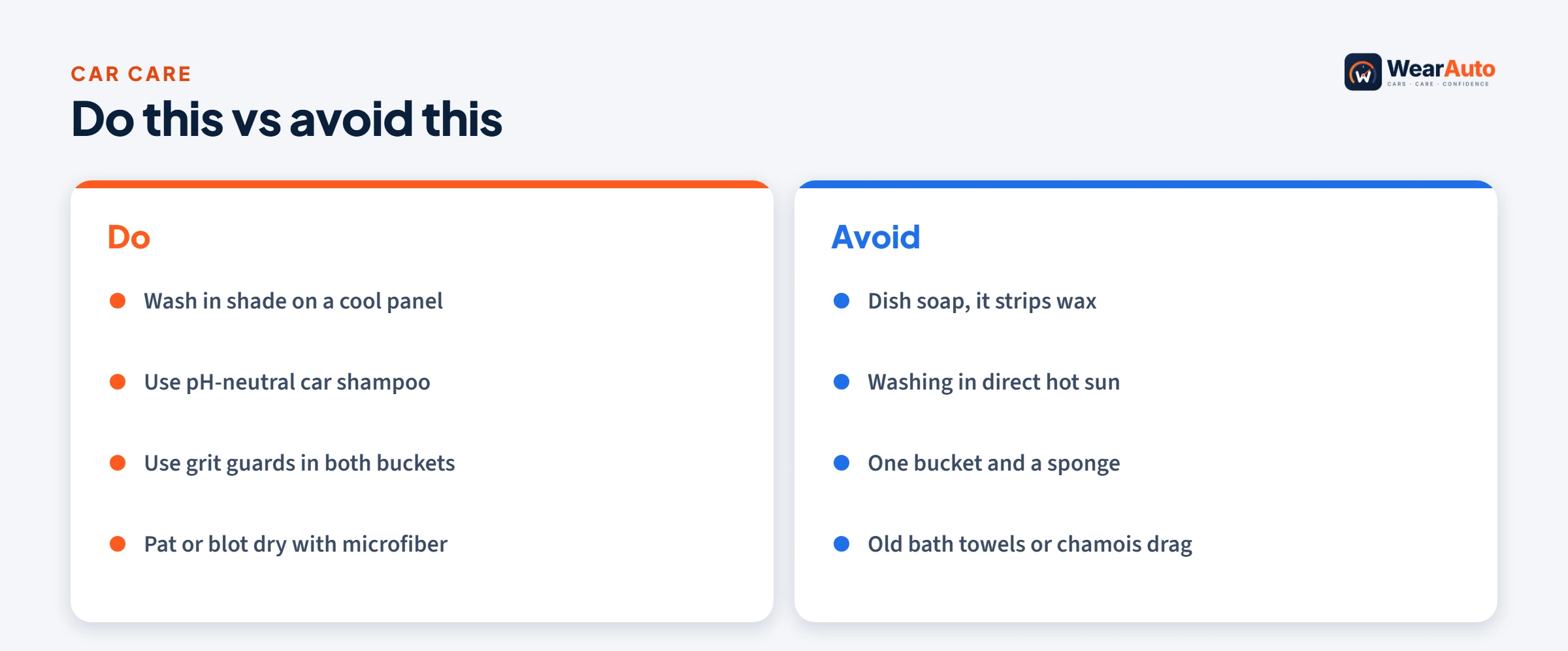
- Wash in the shade, on cool paint.
- Use a pH-neutral car shampoo, never dish soap.
- Put a grit guard in the bottom of each bucket.
What You Need
- Two buckets, ideally 3 to 5 gallons each, labeled “soap” and “rinse.”
- Two grit guards. These plastic grates sit in the bottom of the buckets and trap dirt below the mitt.
- pH-neutral car shampoo. Use the dilution on the bottle.
- A microfiber or lambswool wash mitt. Have a second mitt for lower panels if the car is very dirty.
- Separate wheel brushes and a wheel bucket or cleaner. Brake dust is abrasive and shouldn’t touch your paint mitt.
- A hose with a spray nozzle or a pressure washer on a gentle setting.
- Large, plush microfiber drying towels or a car dryer/leaf blower.
Getting the shampoo ratio right matters. Too little and you lose lubrication; too much wastes product and can leave residue. Our car wash dilution ratio calculator works out the exact amount for your bucket size.
Step-by-Step: The Two-Bucket Method
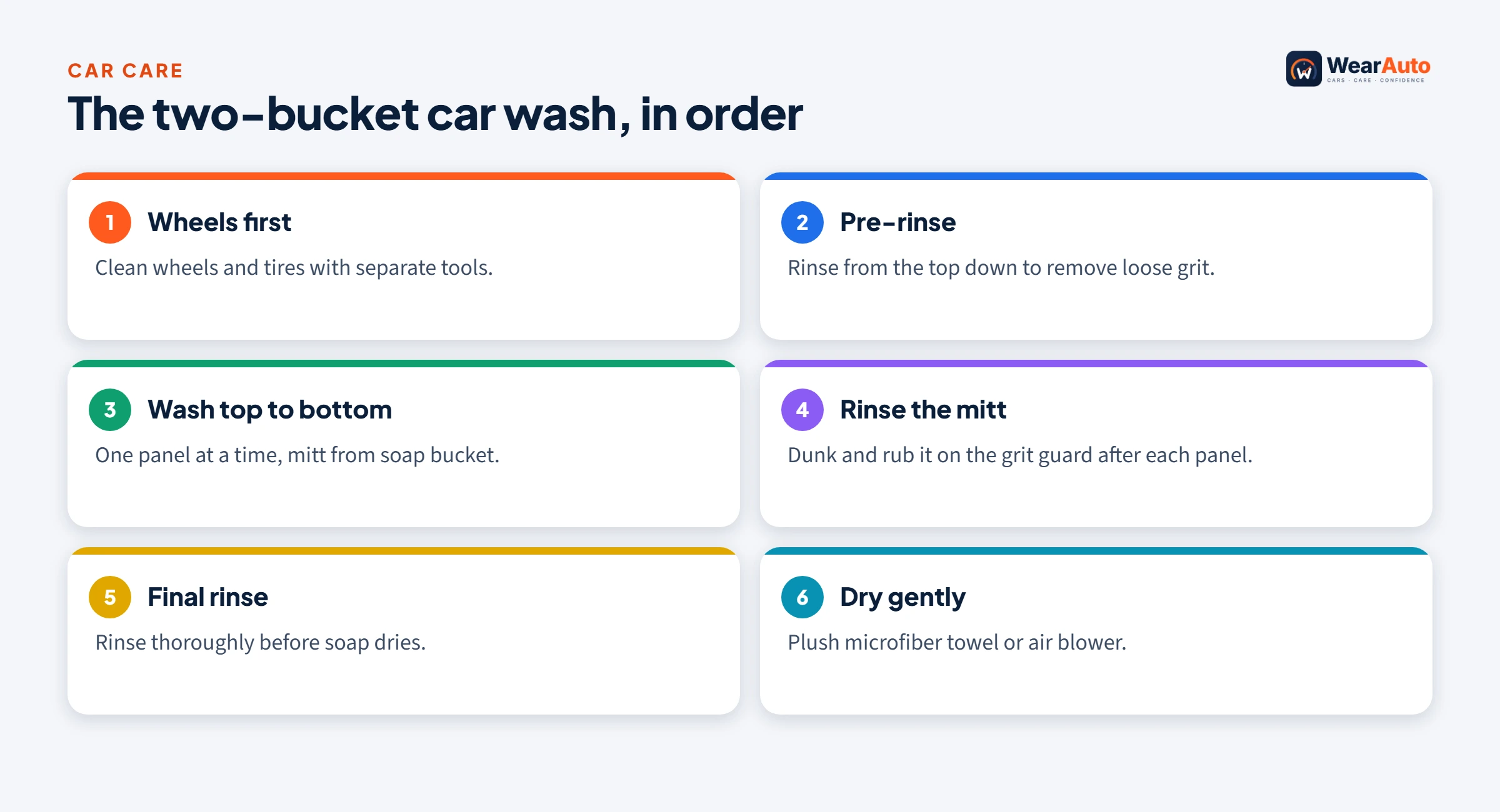
Step 1: Park in the shade and let the car cool
Hot paint makes soap and water dry fast, leaving spots that can etch into the clear coat. Early morning or late afternoon is ideal. Touch the hood. If it’s too hot to keep your hand on, wait.
Step 2: Clean the wheels and tires first
Wheels are the dirtiest part of the car, so do them first to avoid splashing brake dust onto clean paint. Spray a wheel cleaner that’s safe for your wheel finish, agitate with a soft brush, scrub the tire sidewalls and rinse well. Use different tools from the ones you’ll use on the paint.
Step 3: Pre-rinse the whole car
Rinse from the roof down to knock off loose dirt and grit. The more you remove now, the less you’ll drag across the paint later. If you have a foam cannon or pump sprayer, a layer of snow foam left to dwell for a few minutes helps loosen dirt further. Don’t let it dry.
Step 4: Fill your buckets
Fill the rinse bucket with plain water. Fill the soap bucket with water and the right amount of shampoo, adding the soap under running water to build suds. Drop a grit guard into each.
Step 5: Wash from top to bottom, one panel at a time
Load the mitt in the soap bucket and wash the roof first, then the glass, hood and trunk, then the upper sides and finally the lower panels and bumpers, which are the dirtiest. Use straight, overlapping lines rather than circles, and let the soap do the work. Light pressure is enough.
Step 6: Rinse the mitt after every panel
This is the key step. After each panel, dunk the mitt in the rinse bucket and rub it against the grit guard to release dirt. Wring it out, then reload it in the soap bucket. You’ll be surprised how dirty the rinse water gets while the soap water stays relatively clean.
Step 7: Rinse the car thoroughly
Rinse from the top down before any soap can dry. In warm weather you may need to rinse each section as you go. A trick many detailers use is to remove the spray nozzle for the final rinse and let water sheet off the panels, which leaves fewer droplets to dry.
Step 8: Dry without scratching
Use a large, plush microfiber drying towel. Lay it flat and pull it slowly across the panel, or pat and blot. Avoid rubbing hard. An electric car dryer or leaf blower is great for blowing water out of mirrors, grilles and badges so it doesn’t drip later.
How Often Should You Wash Your Car?
Every two weeks is a good routine for most cars. Wash more often in winter if roads are salted, after long drives with lots of bugs, or if bird droppings or tree sap land on the paint. Bird droppings in particular are acidic and can etch clear coat within days in hot weather, so remove them quickly with a quick detailer and a soft towel.
Common Car Washing Mistakes
- Using dish soap. It’s designed to strip grease, so it also strips wax and sealant and can dry out rubber trim.
- Using one bucket. Without a separate rinse bucket, you’re putting dirt straight back onto the paint.
- Dropping the mitt. If it hits the ground, don’t use it again until it’s been thoroughly cleaned. Switch to a spare.
- Washing in direct sun. Water spots and soap residue form quickly and can be hard to remove.
- Using an old bath towel or chamois. These can drag grit across the paint. Microfiber is safer.
- Scrubbing hard on bug splatter. Soak it with a bug remover or warm soapy towel first.
Protect the finish after washing
A clean car is the perfect time to add protection. A spray sealant takes about 15 minutes and helps water and dirt slide off between washes. For longer protection, see our guide on ceramic coating vs wax.
Hand Washing vs Automatic Car Washes
Automatic car washes are convenient, but brush-style machines can leave fine scratches, especially if the brushes are dirty. Touchless washes are gentler but use stronger chemicals to compensate. If you care about the paint, a careful hand wash is still the safest option, and once you have the gear it’s also the cheapest.
Mixing car shampoo by guesswork?
Get the exact amount of shampoo, snow foam or cleaner for your bucket or sprayer.
Open the Dilution Ratio Calculator →Frequently Asked Questions
What is the two-bucket car wash method?
You use one bucket of car shampoo and a second bucket of clean water. After washing each panel, you rinse the dirty mitt in the plain water bucket before reloading it with soap, so grit stays out of your wash water and off the paint.
Can I use dish soap to wash my car?
It is best not to. Dish soap removes wax and sealant protection and can dry out rubber and plastic trim. Use a pH-neutral car shampoo.
Should I wash my car in the sun?
Avoid it if you can. Hot paint makes water and soap dry quickly, leaving spots and streaks. Wash in shade or early morning or evening.
What should I use to dry my car?
A large, plush microfiber drying towel or a car dryer or leaf blower. Pat or gently glide the towel rather than rubbing hard.
How often should I wash my car?
About every two weeks for most drivers, and more often in winter when roads are salted or when bird droppings, sap or bugs land on the paint.
The Bottom Line
Washing a car properly is less about expensive products and more about technique. Wheels first, a thorough pre-rinse, two buckets with grit guards, top-to-bottom washing and gentle drying will keep your paint looking newer for longer.
It takes about 45 minutes once you’re used to it, and it’s one of the cheapest ways to protect your car’s value.
Sources and further reading
- U.S. EPA: Water-efficient practices, including car washing at home
- International Detailing Association: Consumer resources
- AAA: Car care tips
Written and fact-checked by the WearAuto Editorial Team. This guide is general information; always follow your vehicle manufacturer’s specifications and see a qualified mechanic for safety-critical repairs. See our editorial policy for how we research and update articles.