Every car owner wants paint that looks glossy and stays protected. For decades, wax was the default. Now ceramic coatings promise years of protection and that wet, glassy look. But they cost much more and take more work to apply.
So which is better: ceramic coating or wax? This guide compares them on durability, protection, appearance, cost, and upkeep, so you can choose what fits your car and budget.
Quick answer
Ceramic coating lasts much longer than wax, typically 2 to 5 years for a professional coating versus 1 to 3 months for wax. It also resists chemicals, UV, and dirt better, and makes washing easier. Wax is far cheaper, easy to apply at home, and gives a warm glow, but needs frequent reapplication. Choose ceramic if you keep your car for years and want low upkeep. Choose wax if you enjoy detailing or are on a tight budget.
- Neither one stops rock chips or deep scratches.
- A paint sealant is a good middle ground.
What Is Car Wax?
Car wax is a protective layer that sits on top of your paint’s clear coat. Traditional wax uses carnauba, a natural wax from palm leaves, often blended with oils and polymers. Synthetic waxes and spray waxes use man-made polymers.
Wax fills tiny imperfections, adds depth and warmth to the color, and makes water bead. But it is soft and breaks down quickly with heat, washing, and weather.
What Is a Ceramic Coating?
A ceramic coating is a liquid polymer, usually based on silicon dioxide (SiO2), that chemically bonds with the clear coat and cures into a thin, hard, transparent layer. It is much more durable than wax and resists chemicals, bird droppings, road salt, and UV light.
Ceramic coatings are hydrophobic, so water beads and sheets off easily, carrying dirt with it. That makes the car stay cleaner and easier to wash.
Ceramic Coating vs Wax: Side by Side
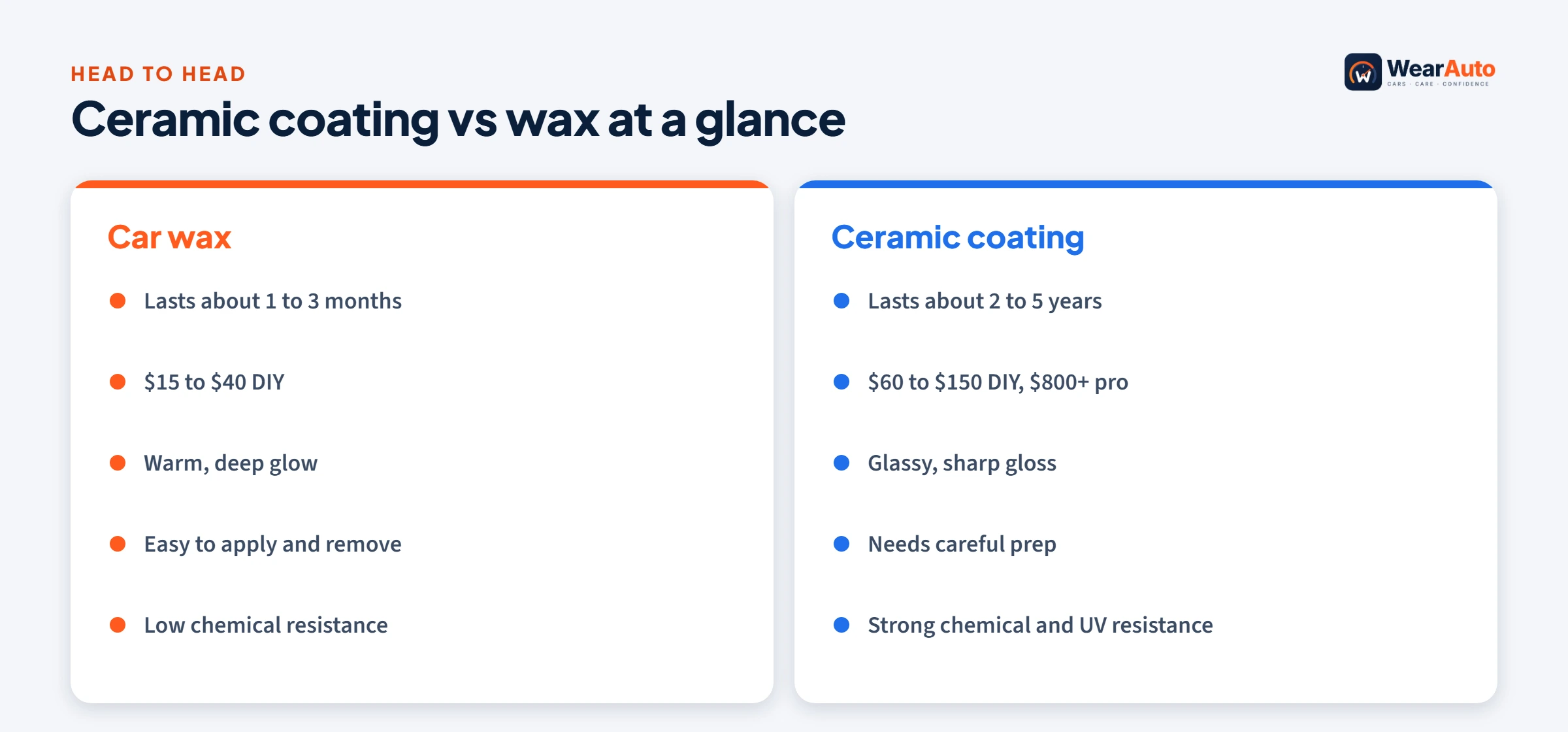
| Factor | Car wax | Ceramic coating |
|---|---|---|
| Durability | 1 to 3 months | 2 to 5+ years (pro) |
| Protection from UV and chemicals | Low | High |
| Water beading | Good at first, fades fast | Strong and long-lasting |
| Look | Warm, deep glow | Sharp, glassy gloss |
| Scratch resistance | Very little | Minor resistance to wash marring |
| Application | Easy, 1 to 2 hours | Needs full paint prep, 1 to 3 days pro |
| Cost | $15 to $40 per bottle | $60 to $150 DIY, $800 to $2,500 pro |
Durability: How Long Each One Lasts
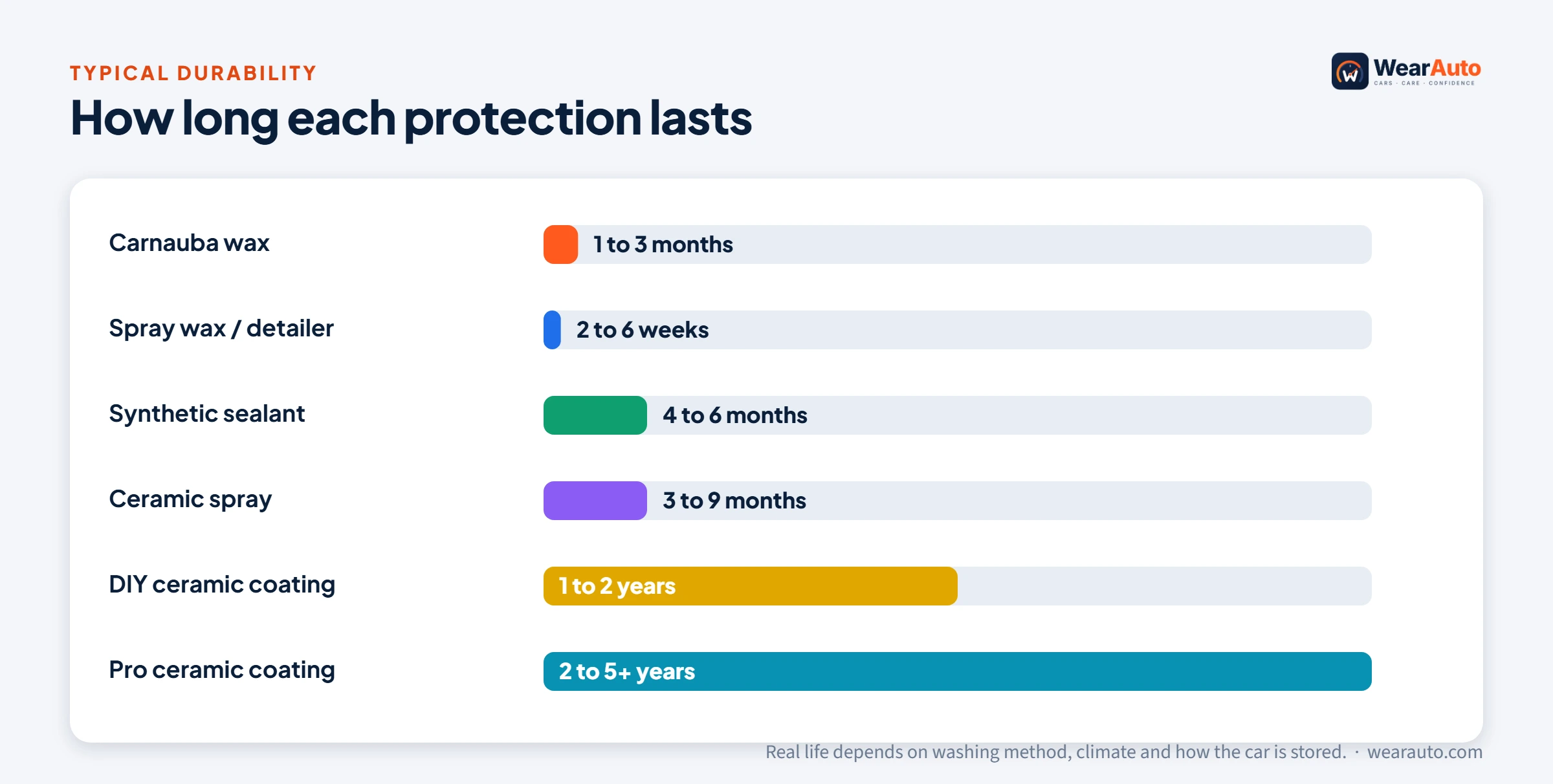
This is the biggest difference. Wax wears off within weeks to a few months, especially with frequent washing or hot weather. A professionally applied ceramic coating can last years with proper care. Paint sealants and ceramic sprays sit in between.
Protection
Ceramic coatings protect better against:
- UV rays that fade and oxidize paint
- Chemical stains from bird droppings, bug splatter, and tree sap
- Road salt and grime
- Water spots, although hard water can still leave marks if left to dry
What neither can do is stop rock chips, deep scratches, or door dings. For that, you need paint protection film (PPF). Some owners combine PPF on the front of the car with a ceramic coating over everything.
Ceramic does not mean scratch-proof
Marketing claims of 9H hardness refer to a pencil hardness test, not real-world scratch resistance. Poor washing habits will still cause swirl marks on a coated car.
Appearance
Wax gives a warm, rich glow that many enthusiasts love, especially on dark colors. Ceramic coatings give a sharper, glassier, candy-like gloss. Both look best on paint that has been washed, decontaminated, and polished first. Neither will hide swirls or scratches for long, so paint correction before a coating is often recommended.
Cost Comparison
Wax
A good bottle of wax costs $15 to $40 and lasts for many applications. If you wax every two months, the yearly product cost is low, but you spend a few hours each time.
DIY ceramic coating
Consumer ceramic kits cost about $60 to $150 and typically last 1 to 2 years. Application takes a full day, including washing, clay bar decontamination, polishing, panel wipe, and coating.
Professional ceramic coating
Professional installation usually costs $800 to $2,500 or more, depending on the car’s size, the amount of paint correction needed, and the coating’s rated life. Higher-end coatings often include a warranty.
Upkeep and Washing
Both need proper washing to last. Use a pH-neutral car shampoo, the two-bucket method, and soft microfiber towels. Our guide on how to wash a car properly covers the technique.
- Waxed cars: reapply every one to three months. Avoid strong degreasers, which strip wax.
- Coated cars: wash every one to two weeks. Use a ceramic top-up spray every few months to keep the beading strong. Avoid automatic car washes with harsh brushes.
Which Should You Choose?
Choose wax if:
- You enjoy detailing your car regularly
- You want the lowest upfront cost
- Your car is older or you plan to sell soon
Choose a ceramic coating if:
- You plan to keep the car for several years
- You want less frequent maintenance
- Your car is new or the paint is in excellent condition
- You live in a harsh climate with strong sun, road salt, or lots of bugs
Consider a sealant or ceramic spray if:
- You want 4 to 9 months of protection without the cost of a full coating
Prep is everything
Whatever you choose, it will only look as good as the paint underneath. Wash, decontaminate with a clay bar, and polish out swirls before applying wax or a coating for the best results.
Frequently Asked Questions
Can you put wax on top of a ceramic coating?
You can, but it is not necessary and it hides the coating’s hydrophobic properties. Use a ceramic-compatible top-up spray instead.
Is ceramic coating worth it on an old car?
It can be if the paint is in good condition and you plan to keep the car for years. If the paint is badly oxidized or scratched, you will need paint correction first, which adds cost.
How long does it take for a ceramic coating to cure?
Most coatings need 24 to 48 hours to cure enough to get wet, and up to two weeks to fully harden. Avoid washing the car with soap during the first week.
Does ceramic coating prevent rock chips?
No. It is too thin to absorb impacts. Paint protection film is the only product designed to protect against rock chips.
How often should I wax my car?
Every one to three months for most waxes, or whenever water stops beading on the paint.
The Bottom Line
Ceramic coating wins on durability, protection, and ease of washing, and it makes sense if you plan to keep your car for years. Wax is cheaper, easy to apply, and gives a beautiful warm glow, but it needs reapplying every month or two. For many drivers, a paint sealant or ceramic spray is the practical middle ground. Whatever you choose, good washing habits are what keep your paint looking new.
Sources and further reading
- International Detailing Association
- Consumer Reports: Car wax ratings and guide
- Car Care Council: Exterior care tips
Written and fact-checked by the WearAuto Editorial Team. This guide is general information; always follow your vehicle manufacturer’s specifications and see a qualified mechanic for safety-critical repairs. See our editorial policy for how we research and update articles.