Car insurance is one of the biggest costs of owning a car, and it keeps climbing. The good news is that drivers who take a little time each year to review their policy usually find real savings, often hundreds of dollars, without giving up the protection they need.
Here are 15 proven ways to lower your car insurance, starting with the ones that typically save the most.
Quick answer
The fastest ways to lower car insurance are to compare quotes from at least three insurers every year, raise your deductible to an amount you could afford to pay, bundle auto with home or renters insurance, and ask for every discount you qualify for. Usage-based programs that track safe driving can also cut premiums significantly.
- Review your policy at renewal and after any life change.
- Do not cut liability coverage below what protects your assets.
Biggest Savings First
1. Shop around every year
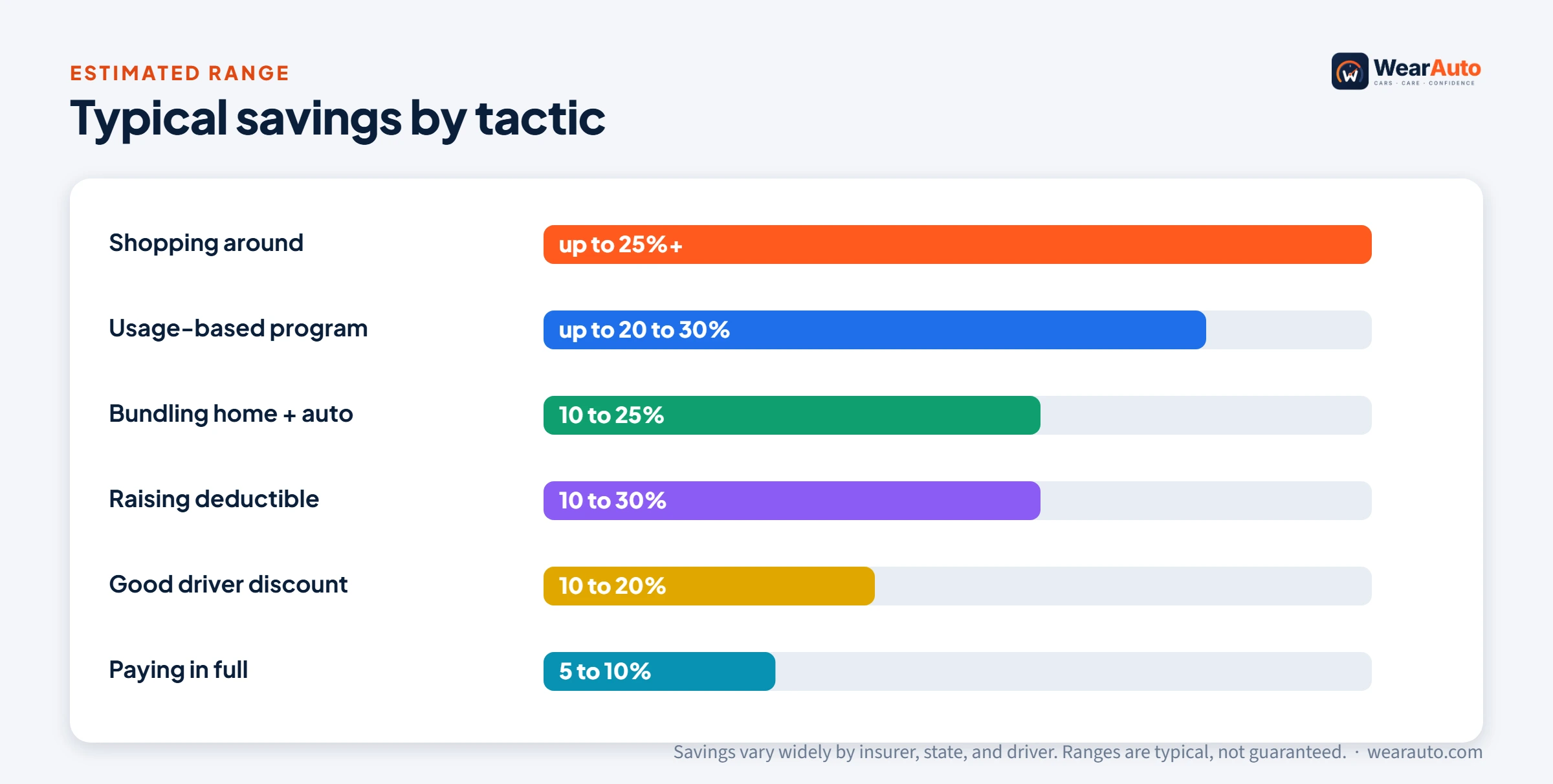
Insurers price the same driver very differently. Getting quotes from at least three companies, including smaller regional insurers, is often the single biggest way to save. Do it at every renewal, and especially after moving, adding a driver, or buying a car. Make sure you compare the same coverage limits and deductibles.
2. Raise your deductible
Your deductible is what you pay before collision or comprehensive coverage kicks in. Raising it from $250 to $1,000 can cut those parts of your premium significantly. Only choose a deductible you could pay from savings tomorrow.
3. Try a usage-based or telematics program
Many insurers offer programs that track braking, speed, phone use, and mileage through an app or plug-in device. Safe drivers can earn sizable discounts. Be aware that risky driving can raise your rate with some insurers, so read the terms.
4. Bundle your policies
Buying auto and home, renters, or condo insurance from the same company usually earns a multi-policy discount. Still compare the bundle price against separate policies from different insurers.
5. Keep a clean driving record
Accidents, speeding tickets, and DUIs raise premiums for three to five years or more. Driving carefully is the long-term way to keep your rates low. Some insurers also offer accident forgiveness.
Ask for Every Discount
6. Ask about discounts directly
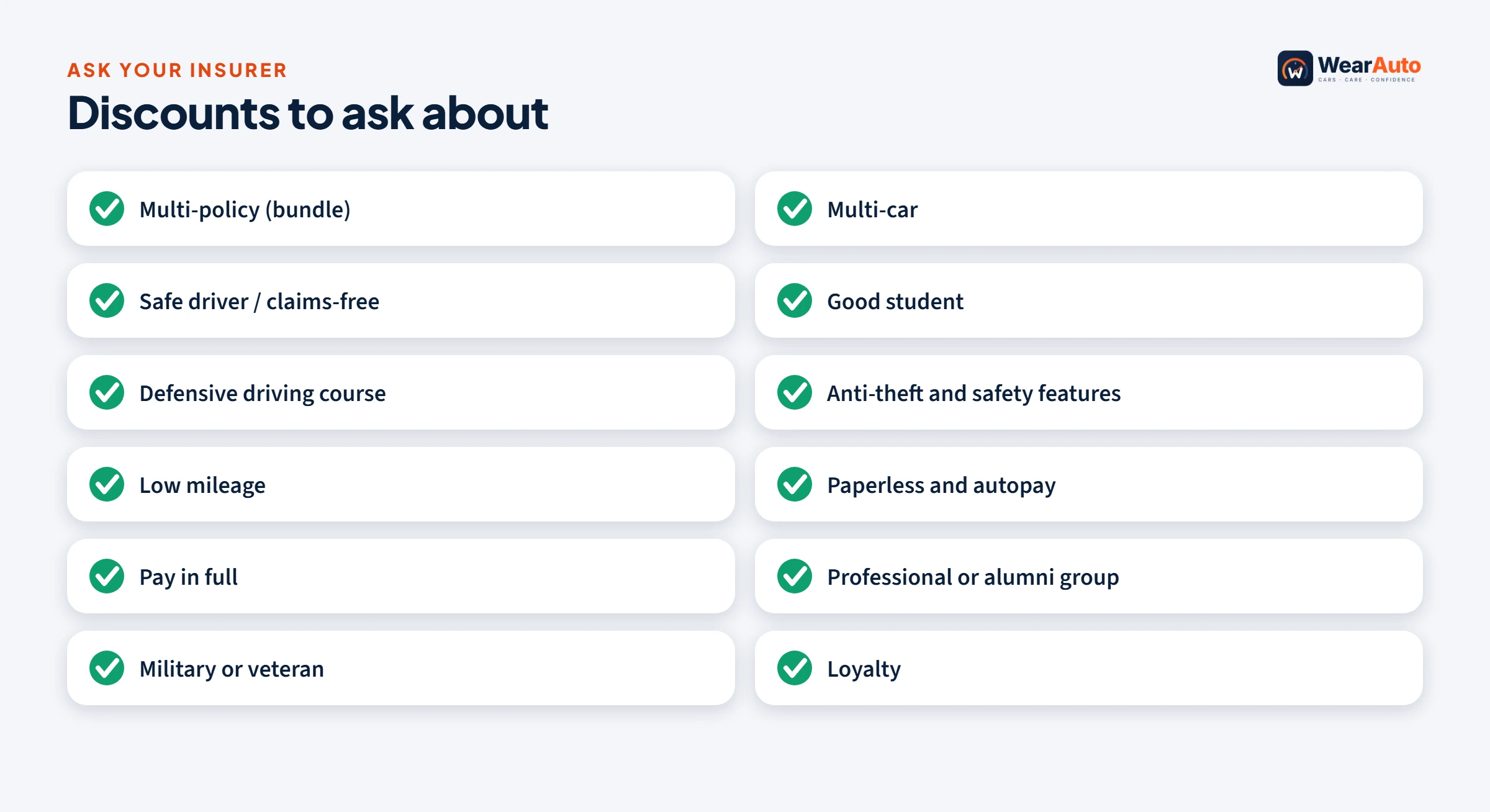
Many discounts are not applied automatically. Call your insurer and ask for a review. Common ones include safe driver, multi-car, anti-theft device, paperless billing, and automatic payments.
7. Take a defensive driving course
In many states, completing an approved defensive driving course earns a discount for several years, especially for older drivers.
8. Good student discount
Students with a B average or better often qualify for a meaningful discount. Some insurers also discount students who live at school far from home without a car.
9. Group and professional discounts
Employers, alumni groups, professional associations, credit unions, and military organizations often have deals with insurers.
Adjust Your Coverage Wisely
10. Drop collision and comprehensive on an older car
If your car is worth only a few thousand dollars, the cost of collision and comprehensive may be close to what you would receive after a total loss minus the deductible. A common rule of thumb: if the annual cost of that coverage is more than about 10% of the car’s value, consider dropping it.
| Coverage | What it covers | Can you reduce it? |
|---|---|---|
| Liability | Damage and injury you cause to others | Rarely. Keep it high to protect your assets. |
| Collision | Damage to your car from a crash | Yes, on older, low-value cars |
| Comprehensive | Theft, weather, fire, animals | Yes, on older cars, or raise the deductible |
| Uninsured motorist | Injuries caused by uninsured drivers | Keep it in most cases |
| Extras (rental, roadside) | Rental car, towing | Drop if you already have them elsewhere |
Do not under-insure liability
State minimum liability limits are often far too low to cover a serious crash. If you cause more damage than your policy covers, you can be personally responsible for the rest. Cutting liability is rarely a good way to save.
11. Remove extras you already have
Roadside assistance and rental reimbursement may duplicate coverage you already have through a credit card, a motor club, or your car’s warranty.
12. Report lower mileage
If you now work from home or drive less, tell your insurer. Low annual mileage often earns a lower rate. Some insurers offer pay-per-mile policies for drivers who rarely use their cars.
Long-Term Ways to Pay Less
13. Improve your credit
In most US states, insurers use a credit-based insurance score in pricing. Paying bills on time and keeping credit card balances low can lower your premium over time. California, Hawaii, Massachusetts, and Michigan limit or ban this practice.
14. Pay in full and go paperless
Paying the six- or twelve-month premium upfront often avoids installment fees and may earn a discount. Paperless billing and autopay can add a small extra saving.
15. Choose a car that is cheaper to insure
Before buying a car, get insurance quotes for the models you are considering. Cars with high theft rates, expensive repairs, or powerful engines cost more to insure. Vehicles with strong safety ratings and advanced driver assistance systems are often cheaper. Insurance should be part of your total cost of ownership, along with fuel and maintenance.
How Much Can You Realistically Save?
Most drivers who compare quotes, adjust deductibles, and claim their discounts can save a meaningful amount, often 10% to 30% of their annual premium. Results depend heavily on your state, driving history, age, vehicle, and the insurers available to you.
Set a yearly reminder
Put a reminder in your calendar one month before your policy renews. That gives you time to gather quotes and switch without a lapse in coverage.
Frequently Asked Questions
Does my car insurance go down as I get older?
Generally, rates fall significantly after age 25 and continue to decline for drivers with clean records through middle age. They may rise again for drivers over about 70.
Will switching insurers hurt my credit?
No. Insurance quotes use a soft credit inquiry, which does not affect your credit score.
Is it worth filing a small claim?
Often not. If the damage is close to your deductible, paying out of pocket can avoid a rate increase that costs more over several years.
Does the color of my car affect insurance?
No. Insurers look at the make, model, year, engine, safety features, and repair costs, not the paint color.
When should I drop full coverage?
Consider dropping collision and comprehensive when the car’s value is low and the yearly cost of that coverage is more than about 10% of what the car is worth, as long as you could afford to replace the car.
The Bottom Line
The most effective way to lower your car insurance is to compare quotes every year and ask your insurer for every discount you qualify for. Then adjust your deductible and coverage to fit your car’s value and your savings, while keeping strong liability protection. Combined with a clean driving record, these steps can save you hundreds of dollars a year.
Sources and further reading
- Insurance Information Institute: Ways to lower auto insurance costs
- NAIC: Auto insurance consumer guide
- Consumer Federation of America: Auto insurance
Written and fact-checked by the WearAuto Editorial Team. This guide is general information; always follow your vehicle manufacturer’s specifications and see a qualified mechanic for safety-critical repairs. See our editorial policy for how we research and update articles.