That little horseshoe-shaped symbol with an exclamation point is your tire pressure monitoring system (TPMS) warning light. It is one of the most common dashboard lights, and in most cases the fix is simple: one or more tires need air.
But the TPMS light can also mean a sensor has failed or the system needs to be reset after tire service. This guide explains what the light means, why it comes on, how to reset it, and when you need a professional.
Quick answer
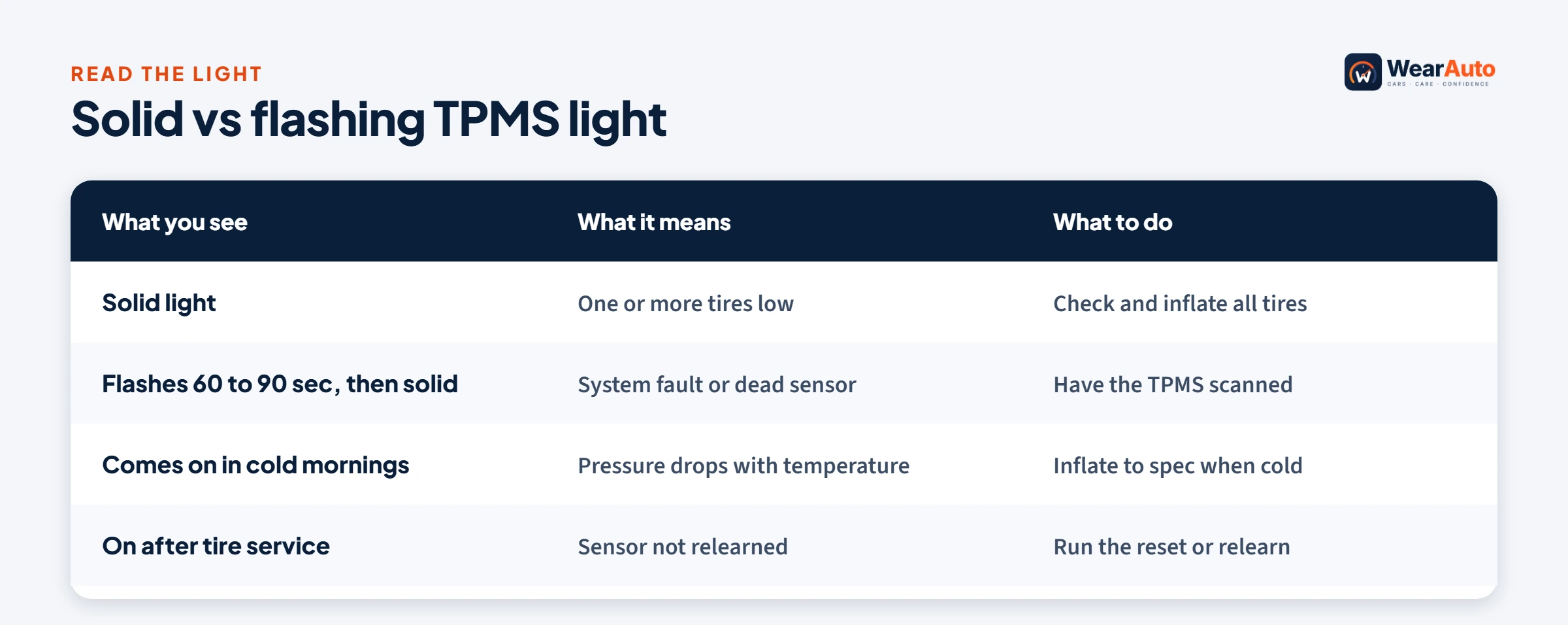
A solid TPMS light usually means at least one tire is 25% or more below its recommended pressure. Check all four tires with a gauge when they are cold and inflate them to the pressure on the driver’s door jamb sticker. The light often turns off after a few minutes of driving. If the light flashes for about a minute at startup and then stays on, the system itself has a fault, usually a dead sensor battery.
- Do not ignore it. Underinflated tires wear faster and handle worse.
- Cold weather can trigger the light even without a leak.
What the TPMS Light Means
Since 2008, every new passenger car sold in the US has a TPMS. It warns you when a tire’s pressure falls significantly below the recommended level, which for most systems means about 25% under spec.
There are two types of systems:
- Direct TPMS uses a battery-powered sensor inside each wheel that reports actual pressure. Many cars show the pressure of each tire on the dash.
- Indirect TPMS uses the anti-lock brake wheel speed sensors to detect that a low tire is spinning slightly faster than the others. It does not measure pressure directly.
Common Reasons the TPMS Light Comes On
1. Low tire pressure
This is the most common cause. Tires naturally lose about 1 psi per month, and faster if they have a slow leak from a nail, a bad valve stem, or a damaged bead. Check all four tires and compare them with the number on your door jamb. Our guide on the correct tire pressure for your car shows where to find it.
2. Cold weather
Tire pressure drops about 1 psi for every 10°F drop in temperature. A tire that was fine on a warm afternoon can trigger the light on a cold morning. The light may go out as the tires warm up, but the right fix is to add air to the recommended cold pressure.
3. A puncture or slow leak
If one tire keeps losing pressure, look for a nail or screw in the tread, spray soapy water on the valve stem, and watch for bubbles. A tire shop can usually plug or patch a tread puncture for a modest cost.
4. A dead or damaged TPMS sensor
Direct TPMS sensors run on sealed batteries that last about 5 to 10 years. When one dies, the light usually flashes for 60 to 90 seconds at startup and then stays solid. Sensors can also be damaged during tire mounting.
5. The system needs a reset or relearn
After rotating tires, replacing a tire, or swapping to winter wheels, some cars need the system reset or the sensors relearned to their new positions.
6. The spare tire
Some cars have a sensor in the full-size spare. A low spare can turn on the light even when all four road tires are fine.
How to Fix and Reset the TPMS Light
Step 1: Check and inflate all tires
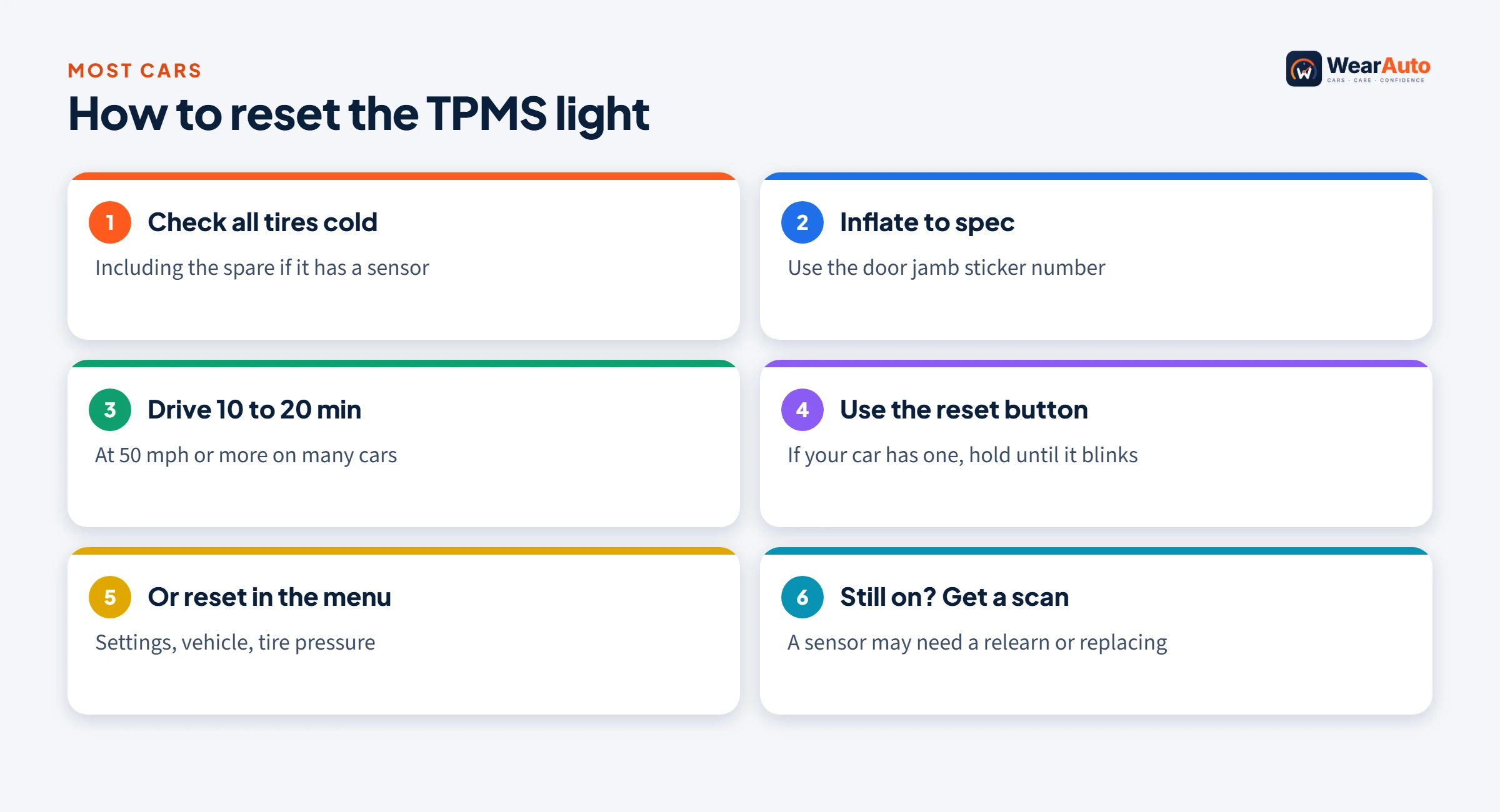
Use a reliable tire gauge and check each tire when cold, meaning the car has been parked for at least three hours or driven less than a mile. Inflate to the pressure on the door jamb sticker, not the maximum pressure printed on the tire sidewall.
Step 2: Drive for a few minutes
On many cars, the light turns off automatically after you drive for 10 to 20 minutes, sometimes above about 50 mph, so the sensors can send new readings.
Step 3: Use the reset button or menu
Some cars have a TPMS reset button, often below the steering wheel or in the glove box. With the ignition on, hold it until the light blinks three times, then release and drive for 20 minutes. Other cars, especially those with indirect TPMS, have a reset option in the settings menu. You should reset an indirect system after you inflate the tires so it learns the new baseline.
Step 4: Have the system scanned
If the light stays on or flashes at startup, a tire shop can scan the sensors with a TPMS tool to find which one has failed and relearn the sensors to the car.
Do not drive on a very low tire
If a tire looks visibly flat or the dash shows a pressure far below the others, pull over safely and check it. Driving on a badly underinflated tire can cause overheating and a blowout.
What a TPMS Repair Costs
| Repair | Typical cost (US) |
|---|---|
| Adding air | Free to $2 at most gas stations |
| Plug or patch a puncture | $15 to $40 |
| TPMS sensor replacement (per wheel) | $50 to $150 installed |
| Valve stem service kit | $5 to $15 per wheel |
| TPMS relearn or programming | $0 to $50 |
If one sensor battery has failed on a car more than seven years old, the others may not be far behind. Some drivers replace all four at once when getting new tires to save on labor.
Why You Should Not Ignore the TPMS Light
Underinflated tires flex more, build up heat, and wear out faster, especially on the outer edges. They also lengthen braking distances and reduce fuel economy. Keeping your tires properly inflated is one of the simplest ways to make your tires last longer and to improve gas mileage.
The TPMS is a backup, not a replacement for regular checks. By the time it lights up, a tire may already be well below the right pressure. Check pressure with a gauge at least once a month.
Frequently Asked Questions
Is it safe to drive with the TPMS light on?
You can drive a short distance carefully to the nearest air pump. Check all four tires as soon as possible. If a tire is visibly low or the car pulls to one side, stop and inspect it.
Why is my TPMS light on when my tires are fine?
The most likely reasons are a failed sensor battery, a sensor that needs to be relearned after tire service, a low spare tire, or cold weather. If the light flashes at startup, the system has a fault.
Why does the TPMS light come on when it is cold?
Air contracts as it cools, and tire pressure drops about 1 psi for every 10°F. Inflate the tires to the recommended pressure when they are cold.
How do I reset the TPMS light without a button?
Inflate the tires to spec, then drive for 10 to 20 minutes. Many cars also have a reset option in the vehicle settings menu. Your owner’s manual will describe the exact process.
How long do TPMS sensors last?
Most last about 5 to 10 years, depending on how much the car is driven. The battery is sealed, so the whole sensor is replaced when it dies.
The Bottom Line
When the TPMS light comes on, start with a tire gauge. In most cases, one or more tires are low, and inflating them to the pressure on the door jamb sticker fixes the problem. If the light flashes at startup or will not turn off after you inflate the tires and drive, a sensor has likely failed or needs a relearn, which any tire shop can handle. Treat the light as a warning, and check your tire pressure monthly so it rarely needs to warn you.
Keep reading
Related guides
Free tools for this topic
Sources and further reading
- NHTSA: Tire pressure monitoring systems
- Tire Industry Association: TPMS resources
- U.S. Department of Energy: Keeping tires properly inflated
Written and fact-checked by the WearAuto Editorial Team. This guide is general information; always follow your vehicle manufacturer’s specifications and see a qualified mechanic for safety-critical repairs. See our editorial policy for how we research and update articles.