
Brake pads are designed to wear out. Every time you slow down, a little of the pad material is ground away against the rotor, turning your car’s motion into heat. The question isn’t whether they’ll need replacing but when, and the answer varies more than almost any other part on the car. Two drivers with the same model can see pad life differ by 40,000 miles.
Here’s what to expect, what speeds up wear, and the signs that tell you it’s time for new pads before the job gets more expensive.
Quick answer
Most brake pads last between 30,000 and 70,000 miles. Heavy city driving, towing and hard braking can cut that to 20,000 miles or less, while gentle highway driving can stretch it well past 70,000. Replace pads when the friction material is down to about 3 to 4 mm (roughly 1/8 inch), or right away if you hear grinding.
Average Brake Pad Life by Driving Type
| Driving pattern | Typical front pad life |
|---|---|
| Heavy city traffic, lots of stop-and-go | 20,000–35,000 miles |
| Mixed suburban and highway | 35,000–55,000 miles |
| Mostly highway | 50,000–70,000+ miles |
| Towing or mountain driving | 15,000–30,000 miles |
| Hybrids and EVs using regenerative braking | Often 70,000–100,000+ miles |
Front pads usually wear out first. When you brake, the car’s weight shifts forward, so the front brakes do most of the work, often around two-thirds or more of the stopping. Rear pads commonly last one and a half to two times as long, although some cars with electronic stability systems use the rear brakes more and wear them faster than you’d expect.
Electric and hybrid vehicles are the big exception. Regenerative braking uses the electric motor to slow the car and recharge the battery, so the friction brakes are used far less. It isn’t unusual for EV owners to go 100,000 miles on the original pads. The catch is that rarely used brakes can rust or stick, so they still need regular inspection.
What Wears Brake Pads Out Faster
- Late, hard braking. Approaching stops at speed and braking hard at the last moment generates far more heat and wear than easing off early.
- Stop-and-go traffic. More stops simply means more wear.
- Weight. Heavy vehicles, full loads and trailers all ask more of the brakes.
- Hills. Riding the brakes down long grades overheats pads. Shifting to a lower gear lets the engine help slow the car.
- Pad material. Soft organic pads are quiet but wear faster. Ceramic pads usually last longest on everyday cars, and semi-metallic pads handle heat well but can wear rotors more.
- Sticking calipers or slide pins. A caliper that doesn’t release fully keeps the pad dragging on the rotor, which can wear one pad out in a few thousand miles.
6 Signs Your Brake Pads Need Replacing
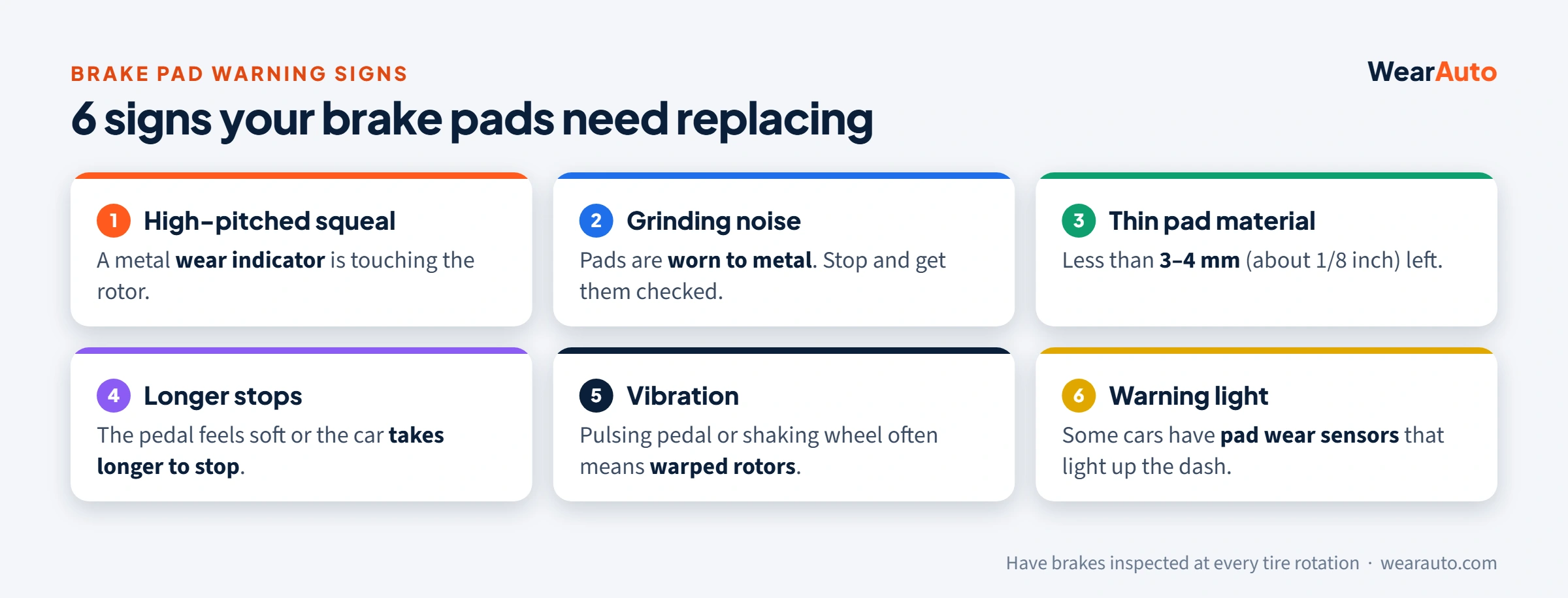
1. A high-pitched squeal when braking
Many pads have a small metal tab called a wear indicator. When the pad gets thin, the tab touches the rotor and squeals to get your attention. It’s a deliberate early warning, so book a brake check soon. Note that a light squeal on the first few stops of a damp morning is often just surface rust and goes away by itself.
2. Grinding or growling
A harsh grinding sound usually means the pad material is gone and the steel backing plate is scraping the rotor. That damages the rotor quickly and seriously reduces braking. Get it looked at right away.
3. Thin pads you can see
On many cars with open-spoke wheels, you can see the outer pad through the wheel. New pads usually have around 10 to 12 mm of friction material. If you see roughly 3 mm or less, they’re due.
4. Longer stopping distances or a soft pedal
If the car takes longer to stop or the pedal travels further than usual, worn pads may be the cause. A spongy pedal can also point to air in the lines or a fluid leak, which needs immediate attention.
5. Vibration through the pedal or steering wheel
A pulsing pedal usually comes from uneven rotor surfaces, often called warped rotors. It frequently shows up alongside worn pads. If your car shakes under braking, our troubleshooting guides cover the other common causes.
6. A brake pad warning light
Many European cars and some others have electronic wear sensors that switch on a dashboard light when the pads are low. The sensor is usually replaced along with the pads.
If the car pulls to one side under braking, that’s a separate warning. It can mean a stuck caliper or contaminated pad, and it should be checked promptly.
Do You Need New Rotors Too?
Not always. Rotors have a minimum thickness stamped on them, and a mechanic can measure whether there’s enough left. Many shops now replace rotors with every pad change because modern rotors are thinner and cheaper than they used to be, and resurfacing them often leaves them too thin. Rotors definitely need attention if they’re scored from metal-on-metal grinding, below minimum thickness, or causing vibration.
As a rough guide, rotors often last through one or two sets of pads. Replacing pads promptly when they first start squealing is the easiest way to avoid paying for rotors early.
How to Make Your Brake Pads Last Longer
- Look further ahead. Lifting off the gas early and coasting toward a red light can eliminate a lot of braking altogether. It saves fuel too.
- Leave more space. A bigger gap to the car in front means gentler, more gradual braking.
- Use engine braking downhill. Shift to a lower gear (or use the “L” or “B” mode) on long descents.
- Lighten the load. Clear out heavy items you don’t need to carry.
- Have the brakes inspected regularly. A quick look at every tire rotation catches sticking calipers and dry slide pins before they ruin pads. See our guide on when to rotate your tires.
- Change brake fluid on schedule. Most manufacturers recommend every 2 to 3 years, since old fluid absorbs moisture and can corrode parts inside the system.
For more brake guides, including costs and troubleshooting, visit our Brakes section.
Frequently Asked Questions
How many miles do brake pads last on average?
Most brake pads last 30,000 to 70,000 miles. City driving and towing shorten that, while highway driving and regenerative braking on hybrids and EVs extend it.
What is the minimum brake pad thickness?
Most mechanics recommend replacing pads at about 3 to 4 mm of friction material, roughly 1/8 inch. Some manufacturers list a hard minimum of 2 mm, but waiting that long risks rotor damage.
Can I replace just the front brake pads?
Yes. Pads are replaced per axle, and front pads usually wear out before the rears. Always replace both sides of the same axle together.
Is it safe to drive with squeaky brakes?
A squeal from the wear indicator means you should book a replacement soon, but it’s usually safe for a short time. Grinding is different: get the brakes checked right away.
Do ceramic brake pads last longer?
Generally, yes. Ceramic pads tend to last longer and produce less dust than organic pads on everyday cars, though they usually cost a little more.
The Bottom Line
Expect somewhere between 30,000 and 70,000 miles from a set of brake pads, with your driving style deciding where you land. Listen for the wear indicator’s squeal, never ignore grinding, and have the pads measured whenever the wheels are off. Smooth, anticipatory driving is the single best way to make them last, and it saves fuel at the same time.
Keep your whole car on schedule
Brakes, oil, tires and batteries: practical maintenance guides from the WearAuto Editorial Team.
Browse Car Maintenance →Keep reading
Free tools for this topic
Sources and further reading
- FuelEconomy.gov: Driving more efficiently
- FuelEconomy.gov: Keeping your vehicle in shape
- NHTSA: Vehicle and tire safety
Written and fact-checked by the WearAuto Editorial Team. Brakes are safety-critical: if you’re unsure about their condition, have a qualified mechanic inspect them. See our editorial policy for how we research and update articles.