A car accident is stressful even when no one is hurt. Your heart is racing, other drivers may be upset, and it is easy to forget important steps. Knowing what to do ahead of time helps you stay safe, protect your rights, and make the insurance process smoother.
Use this step-by-step checklist after any collision, from a minor fender-bender to a more serious crash. Save it on your phone or print it for your glovebox.
Quick answer
After a car accident, stop and stay at the scene, check for injuries, and call 911 if anyone is hurt. Move to a safe spot if you can, turn on your hazard lights, and call the police. Exchange names, contact details, insurance, and license plate numbers with the other driver. Take photos of the vehicles, the scene, and any injuries, collect witness details, and report the accident to your insurance company promptly.
- Do not admit fault or argue at the scene.
- See a doctor even if you feel fine, since some injuries appear later.
Step-by-Step: At the Scene
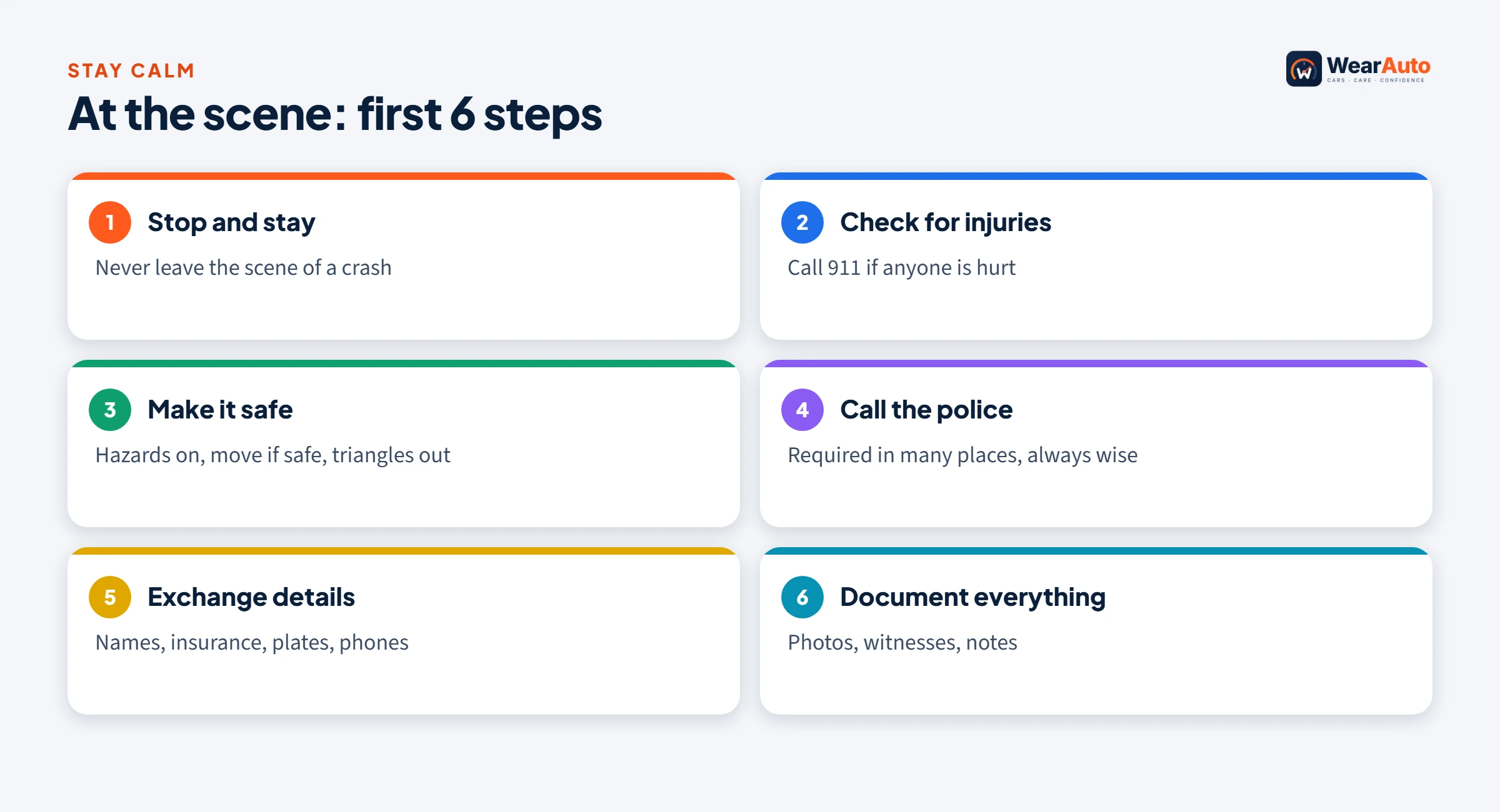
1. Stop and stay at the scene
Leaving the scene of an accident, especially one involving injury, is a crime in every US state. Stop as soon as it is safe to do so.
2. Check for injuries and call 911
Check yourself and your passengers first, then others involved if it is safe. Call 911 if anyone is hurt, unconscious, or complaining of neck or back pain. Do not move someone who may have a spinal injury unless they are in immediate danger, such as from fire.
3. Make the scene safe
If the cars can be driven and no one is hurt, move them to the shoulder or a nearby parking lot. Turn on your hazard lights. Set out warning triangles or flares if you have them. Our car emergency kit checklist lists what to keep in your car for moments like this. If you cannot move the car, get everyone to a safe place away from traffic.
Stay out of traffic lanes
Many secondary injuries happen when people stand in the road after a crash. On a highway, wait behind the guardrail or well off the shoulder.
4. Call the police
Many states require you to report a crash involving injury, death, or property damage above a certain amount, often $1,000 to $2,500. Even for a minor accident, a police report is valuable for insurance claims. If police will not come to a minor crash, ask how to file a report yourself.
5. Exchange information
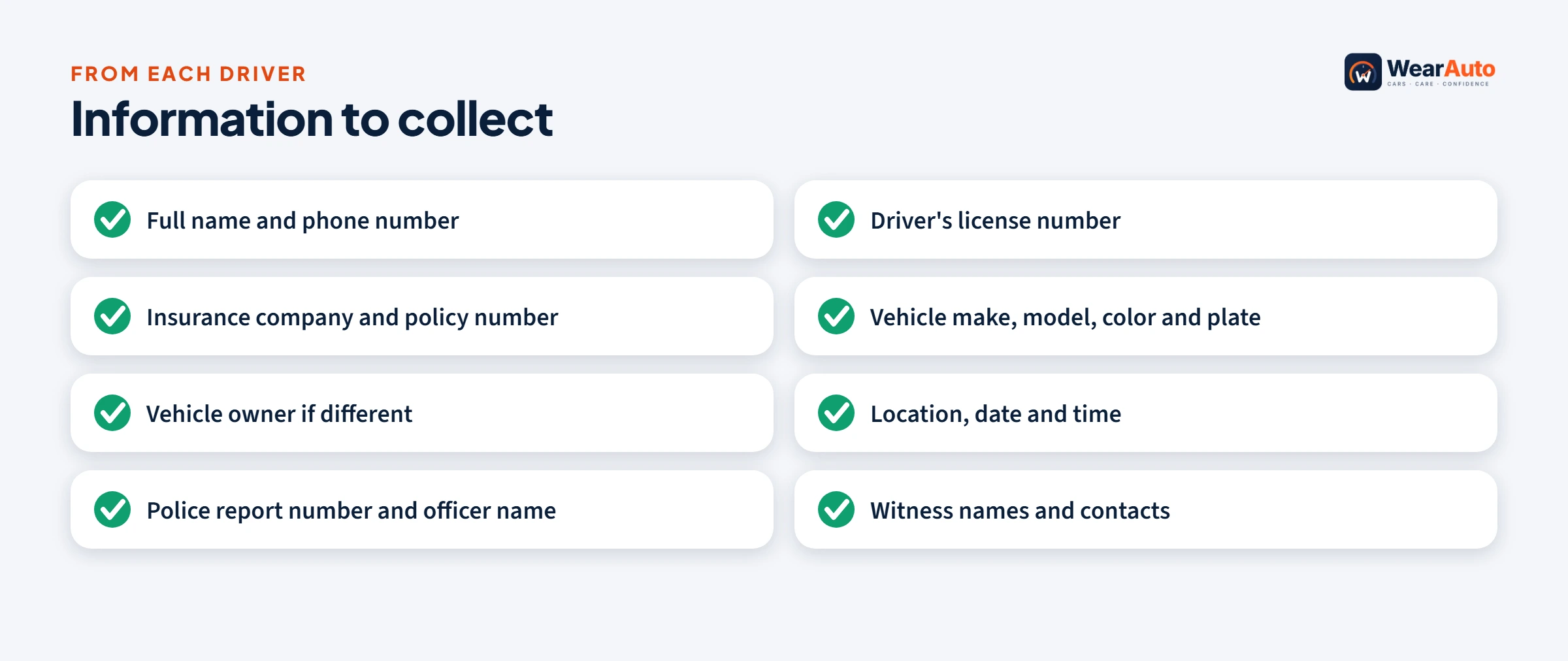
Get the other driver’s details and share yours. Stay polite and stick to the facts.
6. Document the scene
Use your phone to take plenty of photos:
- Damage to all vehicles from several angles
- License plates
- The overall scene, including traffic signs, signals, and road conditions
- Skid marks and debris
- Any visible injuries
Write down or record a voice note of what happened while it is fresh, including the time, direction of travel, and weather.
7. Talk to witnesses
Ask any witnesses for their names and phone numbers. Independent witness statements can be very important if fault is disputed.
Step-by-Step: After You Leave the Scene
8. Get medical attention
Some injuries, like whiplash, concussions, and internal injuries, may not cause symptoms for hours or days. See a doctor soon after the accident, and keep records of all medical visits.
9. Notify your insurance company
Report the accident to your insurer as soon as you reasonably can, even if you were not at fault. Most policies require prompt notice. Give them the facts, the police report number, and your photos.
10. Keep records and track expenses
Keep a folder with:
- The police report
- Photos and notes
- Medical bills and records
- Repair estimates and receipts
- Rental car costs
- Records of time missed from work
What Not to Do After an Accident
- Do not admit fault or apologize in a way that sounds like an admission. Fault will be determined later.
- Do not argue with the other driver.
- Do not sign anything at the scene except documents from the police.
- Do not post about the accident on social media.
- Do not accept a quick cash deal to avoid insurance without understanding the full damage. Hidden damage is common.
- Do not skip the doctor because you feel fine.
Dealing With Insurance and Repairs
| Situation | Who usually pays |
|---|---|
| The other driver is at fault | Their liability insurance |
| You are at fault | Your collision coverage (minus deductible) for your car, your liability for theirs |
| Hit by an uninsured driver | Your uninsured motorist coverage |
| No-fault state | Your own personal injury protection for injuries first |
| Hit and run | Uninsured motorist or collision coverage |
You usually have the right to choose your own repair shop. Get a written estimate, and ask for original equipment parts if your policy covers them. If your car feels different after repairs, such as pulling to one side or a warning light, take it back. Our guide on what the check engine light means can help you decide how urgent a new light is.
An accident claim can affect your premium at renewal. Our guide on how to lower your car insurance explains ways to bring your rate back down over time.
Consider a legal consultation for serious crashes
If anyone was injured, fault is disputed, or the insurance company denies your claim, many personal injury lawyers offer free consultations. Laws and deadlines vary by state.
Frequently Asked Questions
Do I have to call the police after a minor accident?
It depends on your state. Many states require a report for crashes involving injury or damage above a set amount. Even when it is not required, a police report helps with insurance claims.
Should I call my insurance company if the accident was not my fault?
Yes. Most policies require you to report any accident promptly. Your insurer can also help handle the claim with the other driver’s insurance.
How long do I have to report a car accident to insurance?
Policies usually say promptly or as soon as reasonably possible. Some states require reporting to the motor vehicle department within days. Report as soon as you can.
What if the other driver does not have insurance?
Your uninsured motorist coverage can pay for injuries and, in some states, damage to your car. Collision coverage can also cover your car minus your deductible.
Will my insurance go up after an accident?
If you were at fault, your premium will likely increase at renewal. Not-at-fault accidents usually affect rates less, and some insurers offer accident forgiveness.
The Bottom Line
After a car accident, focus on safety first: stop, check for injuries, call 911 if needed, and move to a safe place. Then call the police, exchange information, and document everything with photos and notes. See a doctor, report the accident to your insurer promptly, and keep all your records. Staying calm and following these steps protects your health, your safety, and your claim.
Keep reading
Related guides
Sources and further reading
- NHTSA: Road safety
- Insurance Information Institute: What to do if you have a car accident
- NAIC: Auto insurance claims guide
Written and fact-checked by the WearAuto Editorial Team. This guide is general information; always follow your vehicle manufacturer’s specifications and see a qualified mechanic for safety-critical repairs. See our editorial policy for how we research and update articles.