Your tires are a surprisingly honest record of how your car is set up and driven. When they wear evenly across the tread, everything from tire pressure to wheel alignment is probably fine. When they don’t, the pattern of the wear points straight at the cause.
Learning to read tire wear patterns can save you money twice: once by fixing a problem like misalignment before it ruins a set of tires, and again by catching issues like worn suspension parts early. This guide walks through the common patterns, what each one means and what to do about it.
Quick answer
Center wear usually means overinflation. Both edges worn means underinflation. One edge worn points to a wheel alignment problem. Cupping suggests worn shocks or struts or an out-of-balance tire, and feathering is a sign of toe misalignment.
- Check pressure monthly with a gauge, when tires are cold.
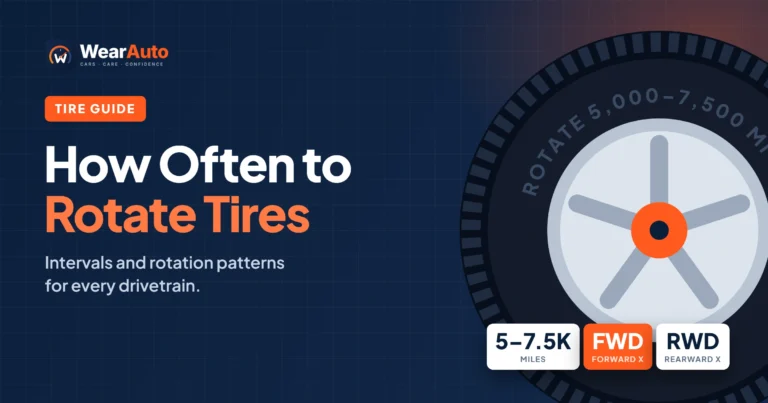
- Rotate tires about every 5,000 to 7,500 miles.
- Uneven wear that keeps coming back needs an alignment or suspension check.
How to Check Your Tires for Uneven Wear
You don’t need special tools. Park on level ground and turn the steering wheel all the way to one side so you can see the full width of the front tires. Then look closely at the tread from the inner shoulder to the outer shoulder.
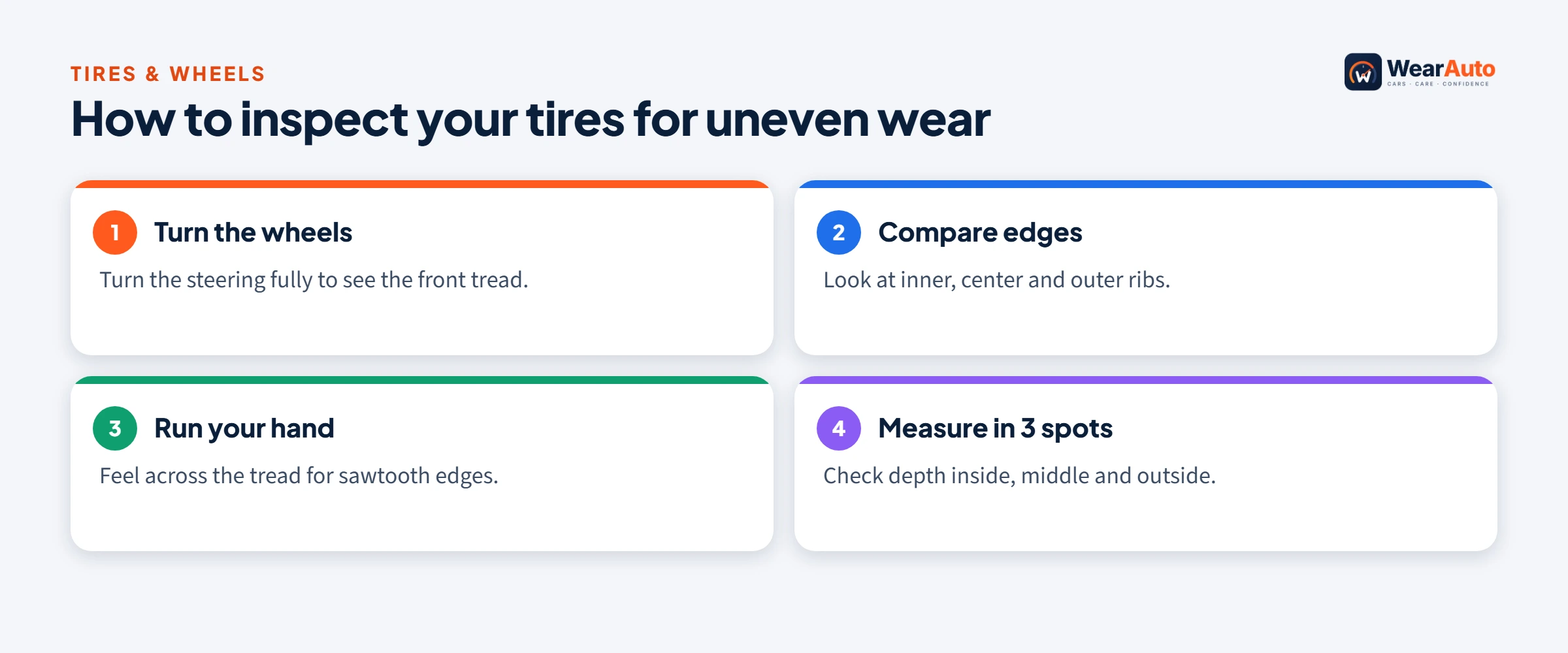
A tread depth gauge costs a few dollars and makes this much easier. Measure the inner, center and outer grooves. A difference of 2/32 inch or more across the same tire is worth investigating.
The Most Common Tire Wear Patterns
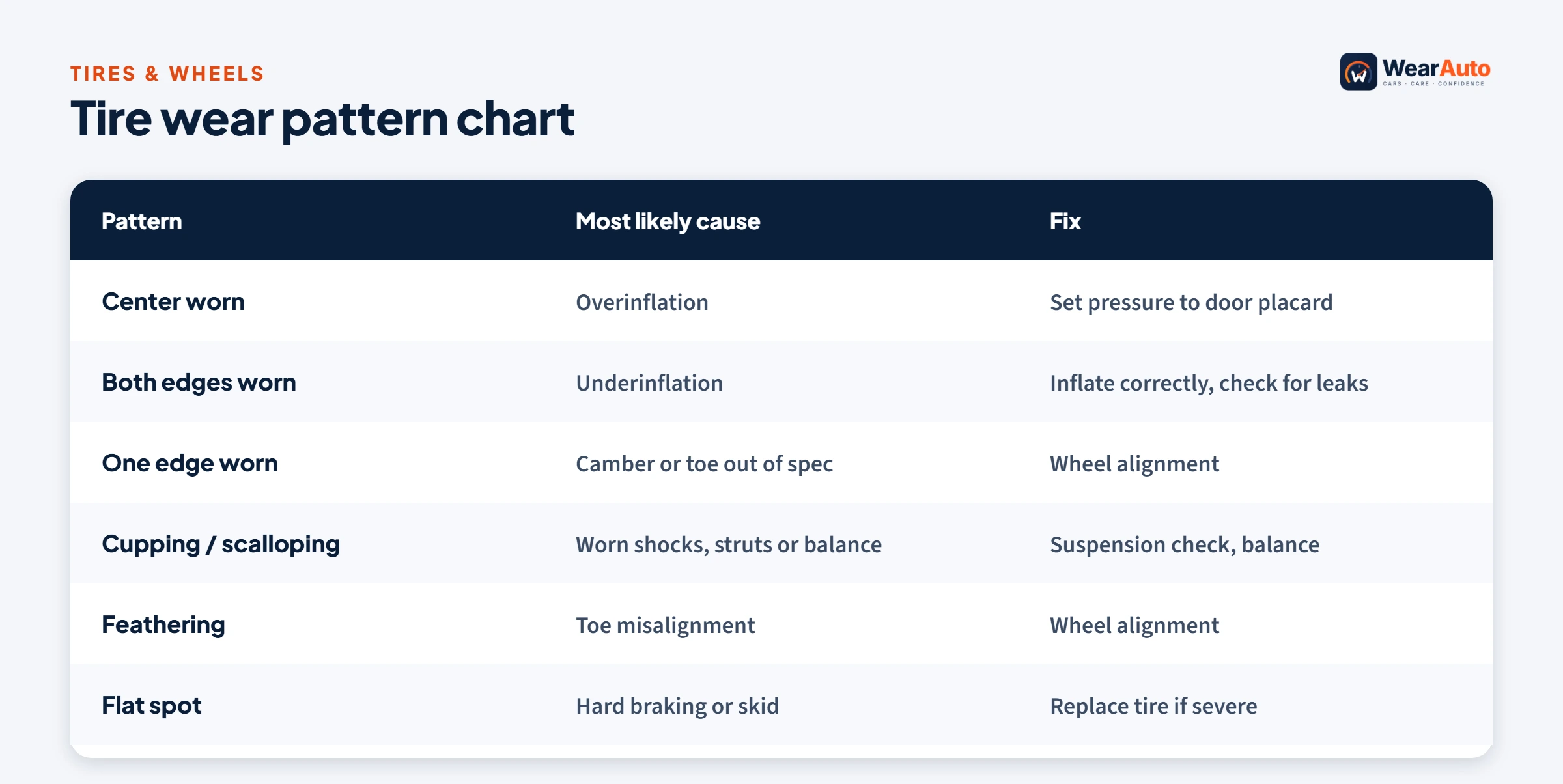
Center wear: too much air
If the middle of the tread is noticeably more worn than the shoulders, the tire has probably been run at too high a pressure. Overinflation makes the tread bulge slightly in the center, so that strip carries most of the load.
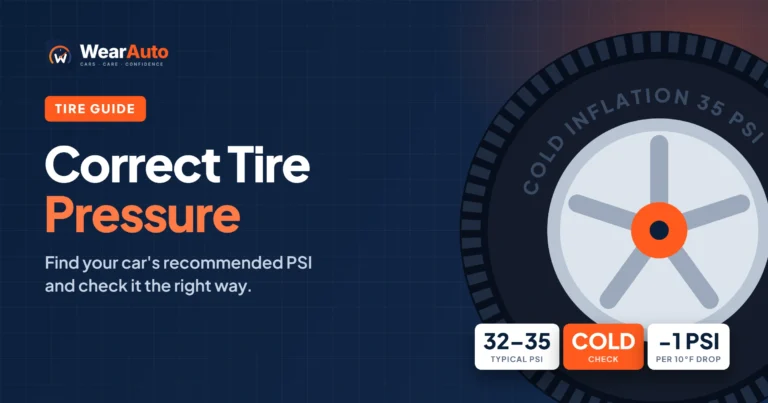
Fix: set the pressure to the figure on your driver’s door jamb placard, not the maximum molded on the sidewall. Our guide to the correct tire pressure for your car explains where to find it.
Both edges worn: too little air
When both shoulders are worn and the center still has good tread, the tire has been underinflated. An underinflated tire flexes more, runs hotter and puts the load on its outer ribs. It also hurts fuel economy and handling.
Fix: inflate to the correct pressure and check for a slow leak from a nail, a leaking valve stem or a corroded wheel bead. Check pressure at least once a month, because tires naturally lose about 1 PSI a month and more in cold weather.
One edge worn: alignment
Wear on only the inner or only the outer edge is the classic sign of a wheel alignment problem, usually camber (the tire leaning in or out at the top) or toe (the tires pointing slightly in or out like feet). Hitting a pothole or curb can knock alignment out, and worn steering or suspension parts can cause it too.
Fix: get a four-wheel alignment. If the shop says parts like tie rod ends or control arm bushings are worn, those must be replaced first or the alignment won’t hold.
Feathering: toe out of spec
Run your hand across the tread. If the tread blocks feel smooth one way and sharp the other, like the edge of a saw, that’s feathering. It’s usually caused by incorrect toe settings and often appears before you can see obvious edge wear.
Fix: a wheel alignment, plus an inspection of steering components.
Cupping or scalloping: suspension or balance
Cupping looks like a series of dips or scoops around the tire, often on the edges. You may also hear a rhythmic humming that changes with speed. It’s commonly caused by worn shocks or struts that let the tire bounce, but bent wheels and badly balanced tires can do it too.
Fix: have the suspension inspected and the wheels balanced. Cupped tires usually stay noisy even after the cause is fixed.
Flat spots
A flat patch in one area usually comes from a hard stop that locked the wheel, common on older cars without ABS, or from a car sitting in one place for months. Mild flat spots from parking can disappear after driving. Skid flat spots are permanent.
Diagonal wipe wear
Patches worn diagonally across the tread, often on rear tires of front-wheel-drive cars, are usually linked to rear toe settings combined with infrequent rotation.
Why Uneven Wear Matters
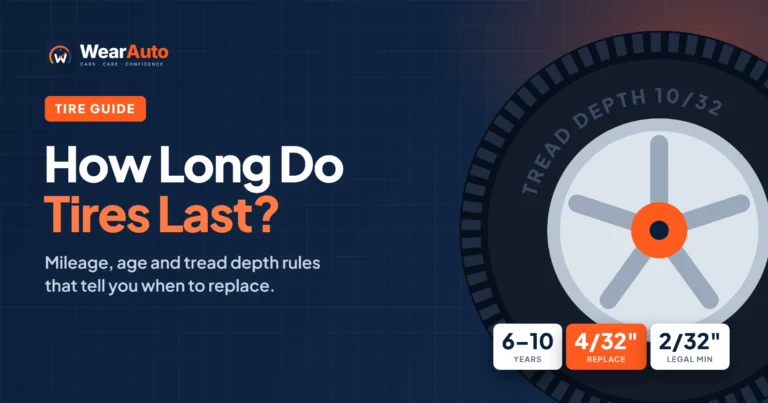
Uneven wear is more than a cosmetic problem. A tire that’s bald on one edge can look fine from the outside and still have dangerously little grip, especially in the rain. It’s also expensive: a set of tires that should last 50,000 miles might need replacing at 25,000. Our guide on how long tires last covers normal wear rates and the legal tread limits.
Check for cords and bulges
If you see steel or fabric cords showing, or a bulge on the sidewall, replace that tire right away. Don’t drive on it, even to the shop if you can avoid it. Fit the spare instead.
How to Prevent Uneven Tire Wear
- Check pressure monthly with a reliable gauge, when the tires are cold.
- Rotate your tires about every 5,000 to 7,500 miles, or as your owner’s manual recommends. See our guide on when to rotate tires for patterns.
- Get an alignment check once a year, after hitting a big pothole or curb, and whenever you buy new tires.
- Balance your wheels when tires are installed, and again if you feel vibration at highway speed.
- Replace worn suspension parts like shocks, struts and bushings when they’re due.
- Avoid overloading the car beyond the payload on the door sticker.
Tire Wear Pattern Quick Guide
| What you see | Probable cause | Next step |
|---|---|---|
| Bald strip down the middle | Overinflation | Lower to placard pressure |
| Both shoulders bald | Underinflation | Inflate, check for leaks |
| Inner edge only | Negative camber or toe | Alignment and steering check |
| Outer edge only | Positive camber, hard cornering | Alignment |
| Sawtooth feel across tread | Toe misalignment | Alignment |
| Scalloped dips | Worn shocks or imbalance | Suspension check and balance |
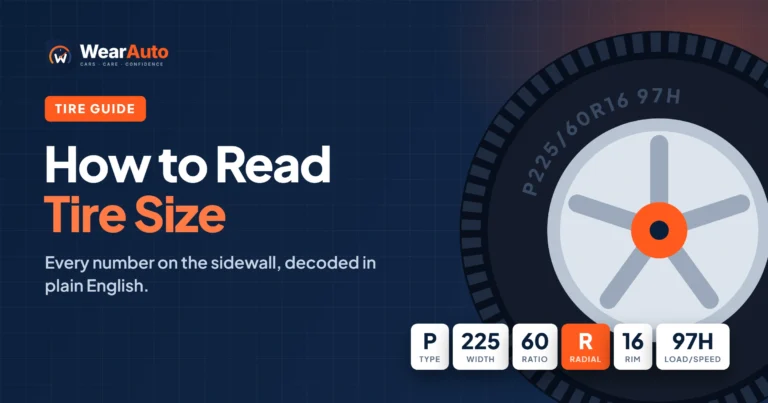
If you’re replacing tires, make sure you know your exact size first. Our guide on how to read tire size explains every number on the sidewall.
Frequently Asked Questions
What causes tires to wear on the inside edge?
Inner edge wear is usually caused by too much negative camber or a toe-out alignment setting, often after hitting a pothole or because of worn suspension bushings or tie rods. A wheel alignment and steering inspection will usually find the cause.
Can a wheel alignment fix uneven tire wear?
An alignment fixes the cause, but it cannot restore rubber that is already worn. Mild uneven wear may even out after rotation, while severe wear means the tire should be replaced.
Why are my tires wearing in the middle?
Center wear almost always means the tires have been overinflated. Set the pressure to the figure on your door jamb placard rather than the maximum on the sidewall.
Is tire cupping dangerous?
Cupping reduces grip and causes noise and vibration, and it usually signals worn shocks or struts that also affect braking and handling. Have the suspension checked soon.
How often should I check my tires for wear?
Look at your tires and check their pressure about once a month, and take a closer look at every rotation or oil change.
The Bottom Line
Tire wear patterns are easy to read once you know what to look for. Center wear means too much air, edge wear means too little, one-sided wear points to alignment, and cupping points to suspension or balance problems.
Check your tires once a month, keep the pressure right, rotate them on schedule and get an alignment when wear starts to look uneven. You’ll get more miles from every set and safer grip on wet roads.
Sources and further reading
- NHTSA: Tires and tire safety
- U.S. Tire Manufacturers Association: Tire care and maintenance
- NHTSA: Tire Safety, everything rides on it (PDF)
Written and fact-checked by the WearAuto Editorial Team. This guide is general information; always follow your vehicle manufacturer’s specifications and see a qualified mechanic for safety-critical repairs. See our editorial policy for how we research and update articles.