
A dead battery in a parking lot, a flat tire at night, a snowstorm that turns a 30-minute drive into four hours. Most roadside problems are not dangerous on their own, but they get worse quickly when you have nothing to work with. A small, well-packed emergency kit turns a scary situation into an annoying one.
This car emergency kit checklist covers the 20 items that are worth the trunk space, the add-ons that depend on where and how you drive, and how to keep the kit ready all year.
Quick answer
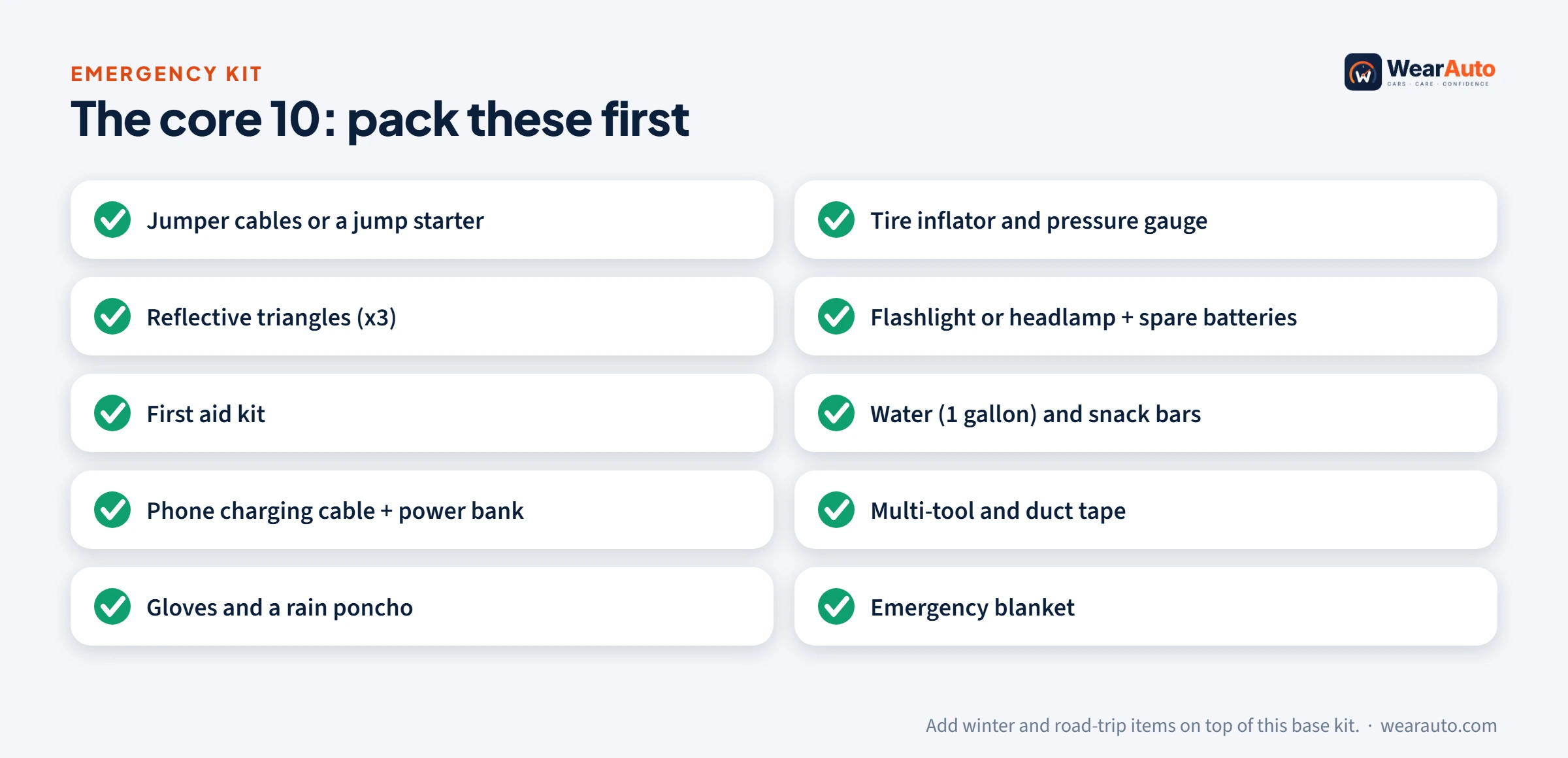
Every car should carry a jump starter or jumper cables, a tire inflator with a pressure gauge, reflective triangles, a flashlight, a first aid kit, water, a phone charger, basic tools, gloves, and an emergency blanket. Add an ice scraper, shovel, and warm clothing in winter, and extra water in hot weather.
- Keep the kit in one bag or bin so it is easy to grab.
- Check it every three months and after every use.
Why Every Car Needs an Emergency Kit
Roadside assistance is great, but it is not instant. Wait times of 45 minutes to over an hour are common, and much longer in bad weather or remote areas. During that time you may need light, warmth, water, a way to warn other drivers, and a way to keep your phone alive.
A kit also lets you fix the simple problems yourself. A jump starter solves a dead battery in five minutes. A plug kit and inflator can get you to a tire shop. Those two items alone cover a large share of everyday breakdowns.
The 20-Item Car Emergency Kit Checklist
Safety and visibility
- Reflective warning triangles (three). Place them behind your car so traffic sees you early. Triangles are safer than flares and never expire.
- Flashlight or headlamp. A headlamp keeps both hands free for changing a tire. Pack spare batteries, or choose a rechargeable light and keep it charged.
- High-visibility vest. Cheap, light, and it makes you far easier to see on a dark shoulder.
- Emergency blanket. A foil blanket weighs almost nothing and holds in body heat if you are stuck with the engine off.
Getting the car moving again
- Jump starter or jumper cables. A portable lithium jump starter does not need a second car. If you carry cables, choose a heavy gauge (4 or 6 gauge) at least 16 feet long. Not sure your battery is the problem? Our guide on how long car batteries last covers the warning signs.
- Tire inflator and pressure gauge. A 12V compressor that plugs into the power outlet can top up a slow leak. Check your correct tire pressure on the door jamb sticker before you inflate.
- Tire plug kit. Plugs fix most nail punctures in the tread well enough to drive to a shop.
- Spare tire, jack, and lug wrench. Check that they are actually in the car and that the spare has air. Many spares sit flat for years.
- Spare fuses. A blown fuse can kill your lights, wipers, or power outlet. Keep a small assortment that matches your car.
- Basic fluids. A quart of the right engine oil and a jug of premixed coolant can save an engine on a long trip.
Tools and repair
- Multi-tool or small tool set. Pliers, screwdrivers, and a knife handle most quick fixes.
- Duct tape and zip ties. They hold a loose bumper, hose, or splash shield in place until you can repair it properly.
- Work gloves. Protect your hands from hot parts, sharp edges, and grime.
- Tow strap. Useful only if you know how to use it safely, but it lets a friend pull you out of a ditch or snowbank.
Personal needs
- First aid kit. Bandages, gauze, antiseptic wipes, pain relievers, tweezers, and any personal medications.
- Water. At least a gallon per car, more in hot climates. Replace it every six months.
- Non-perishable snacks. Energy bars or nuts that tolerate heat and cold.
- Phone charging cable and power bank. Your phone is your lifeline for calling help and sharing your location.
- Rain poncho and warm layer. Changing a tire in the rain is miserable without one.
- Paper notes and a pen. Write down emergency contacts, your insurance number, and roadside assistance details in case your phone dies.
Pack it so you can find it in the dark
Use one duffel bag or a plastic bin with a lid. Put the triangles, flashlight, and vest on top, because those are the first things you need when you stop on a road shoulder.
Add-Ons by Season, Climate, and Trip
The core list works for most drivers. Then adjust it for where you live and how you drive.
Winter driving
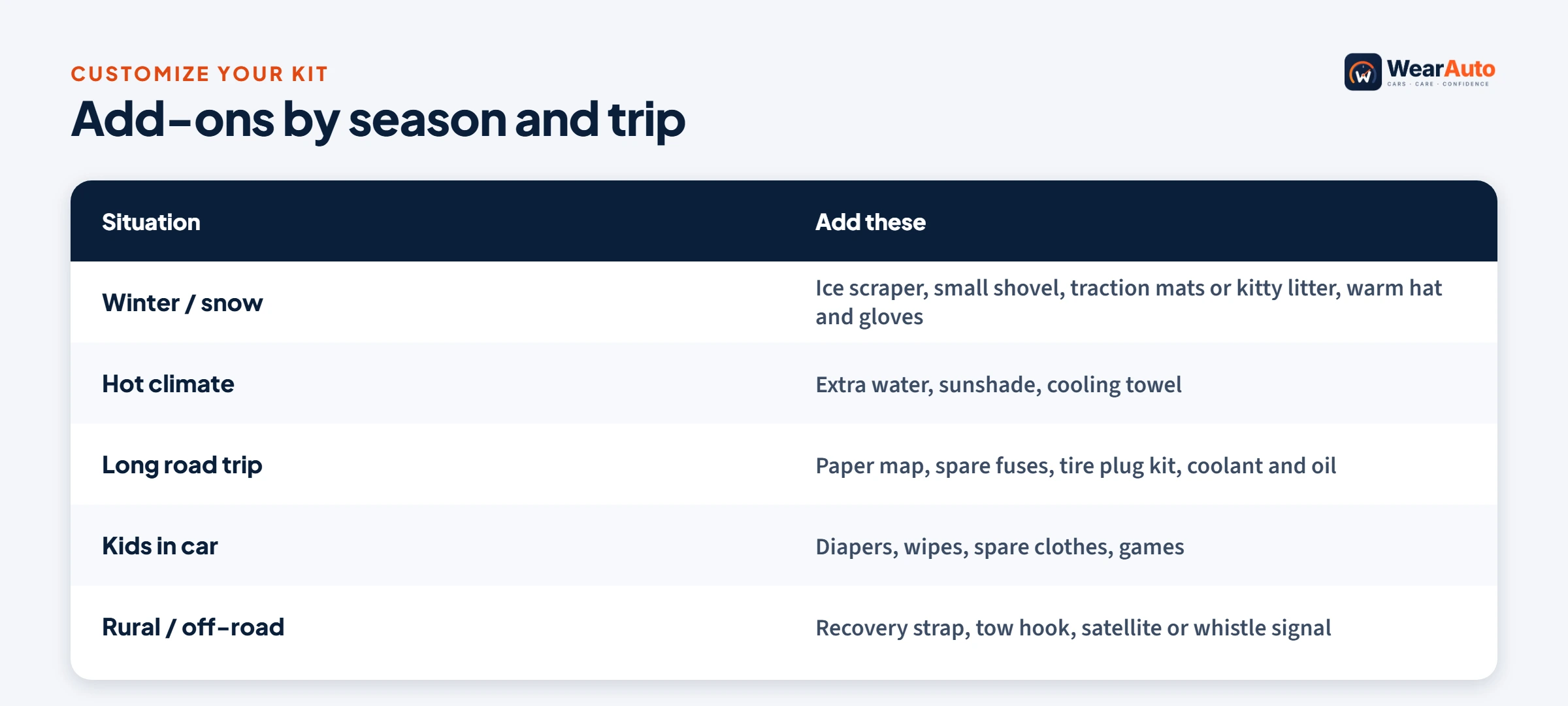
Cold is the biggest risk if you get stranded. Add an ice scraper and snow brush, a compact shovel, traction mats or a bag of cat litter for grip, a warm hat, gloves, and extra blankets. Keep your fuel tank at least half full in winter so you can run the engine for heat if needed.
Prevent carbon monoxide poisoning
If you are stuck in snow and running the engine for heat, clear snow away from the exhaust pipe first and crack a window slightly. Run the engine for about 10 minutes each hour rather than nonstop.
Hot weather
Heat drains batteries and people. Carry extra water, a windshield sunshade, and a cooling towel. Never leave children or pets in a parked car, even for a few minutes.
Long road trips
Add a paper map in case you lose signal, extra oil and coolant, and a tire plug kit if you did not already pack one. Before you leave, check how long your tires last and look at tread depth so a worn tire does not end the trip early.
Families with kids
Pack diapers, wipes, a change of clothes, and something to keep kids busy during a long wait.
How Much a Car Emergency Kit Costs
You can build a solid kit in stages.
| Kit level | What it includes | Typical cost |
|---|---|---|
| Basic | Cables, triangles, flashlight, first aid, water, blanket | $40 to $70 |
| Standard | Basic + jump starter, inflator, plug kit, tools | $120 to $200 |
| Winter or remote | Standard + shovel, traction aids, tow strap, warm gear | $180 to $300 |
Prebuilt kits are convenient, but many include low-quality cables and tiny first aid kits. A good approach is to buy a basic kit and then upgrade the jump starter, flashlight, and inflator yourself.
How to Store and Maintain Your Kit
- Keep it secured. A loose bag becomes a projectile in a crash. Use a trunk organizer or cargo net.
- Check it every three months. Test the flashlight, charge the jump starter and power bank, and replace any used first aid supplies.
- Swap seasonal items. Add winter gear in autumn and swap it for extra water in spring.
- Rotate water and food. Replace water every six months and snacks before they expire.
- Restock after every use. It is easy to forget, and an empty kit is no kit at all.
A good habit is to check your kit when you rotate your tires, roughly every 5,000 to 7,500 miles. Our guide on when to rotate tires explains the timing.
What to Do If You Break Down
Having the kit is half the job. Using it safely is the other half.
- Turn on your hazard lights and steer as far off the road as you can.
- If it is safe, get out on the side away from traffic and put on the reflective vest.
- Place triangles about 10 feet, 100 feet, and 200 feet behind the car on a highway.
- If you are on a busy highway, wait behind the guardrail rather than inside the car.
- Call roadside assistance and share your exact location.
- Only attempt a repair, such as a tire change, if you are well clear of traffic.
If a warning light caused the stop, check our guide to what the check engine light means before you decide whether to keep driving.
Frequently Asked Questions
What is the most important item in a car emergency kit?
A way to restart a dead battery, such as a portable jump starter, and a way to deal with a flat tire are the two items that solve the most breakdowns. For safety, reflective triangles and a flashlight come next.
Is it safe to keep a lithium jump starter in a hot car?
Most quality jump starters are rated for car storage, but extreme heat shortens battery life. Keep it out of direct sun, check the operating temperature on the label, and recharge it every three months.
How often should I check my car emergency kit?
Check it every three months and after each time you use something from it. Swap seasonal items twice a year.
Should I buy a prebuilt kit or make my own?
A prebuilt kit is a fine starting point. Most drivers get better results by upgrading the jumper cables, flashlight, and first aid kit, and by adding a tire inflator.
How much water should I keep in my car?
At least one gallon per car, and more in hot climates or if you often drive with passengers. Replace it every six months.
The Bottom Line
A car emergency kit does not need to be big or expensive. Start with the core 10 items, add the rest of the 20 over time, then customize for winter, heat, or long trips. Keep everything in one bag, check it four times a year, and restock after each use. When something goes wrong on the road, you will be glad it is there.
Sources and further reading
- NHTSA: Winter driving tips
- Ready.gov: Emergency supply kit
- CDC: Carbon monoxide poisoning prevention
Written and fact-checked by the WearAuto Editorial Team. This guide is general information; always follow your vehicle manufacturer’s specifications and see a qualified mechanic for safety-critical repairs. See our editorial policy for how we research and update articles.