When your brakes start to squeal or the mechanic says your pads are getting thin, the next question is usually: how much is this going to cost? The answer varies more than most people expect, depending on your car, the parts used, whether the rotors need work, and where you go.
Here is what brake pad replacement costs in 2026, what drives the price up or down, and how to make sure you are paying a fair price.
Quick answer
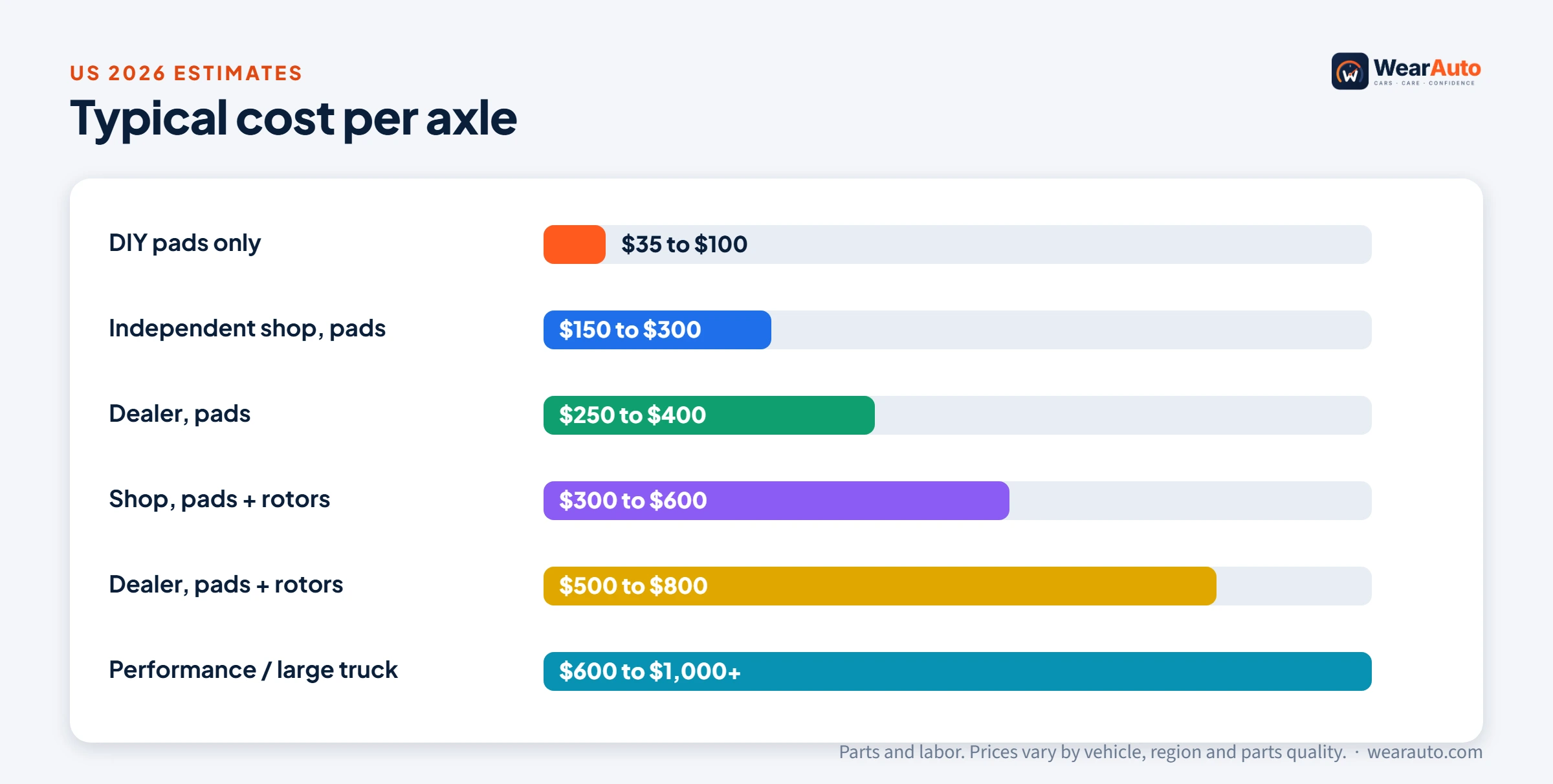
Replacing brake pads typically costs $150 to $300 per axle at an independent shop, including parts and labor. If the rotors also need replacing, expect about $300 to $600 per axle. Dealerships usually charge 20% to 50% more. Doing it yourself costs about $35 to $100 per axle for pads, plus rotors if needed.
- Prices are per axle (front or rear). Front pads usually wear faster.
- Use our brake job cost estimator for a quote range for your car.
Brake Pad Replacement Cost by Option
Pads only
If the rotors are in good condition, a pads-only brake job is the cheapest option. Labor usually runs about 1 to 1.5 hours per axle. Many shops include cleaning and lubricating the caliper slides.
Pads and rotors
Many shops now recommend replacing rotors with the pads, especially on newer cars with thinner rotors. Rotors typically cost $40 to $150 each for common cars, and much more for performance or large trucks.
Dealer versus independent shop
Dealers use original equipment parts and factory-trained technicians but usually charge higher labor rates. Independent shops and chain stores are often cheaper and can offer a choice of parts quality.
Estimate your brake job cost
Choose your vehicle type and what needs replacing to see a typical price range.
Open the estimator →What Affects the Price
Your vehicle
Brake parts for a compact sedan cost far less than for a luxury SUV, heavy-duty pickup, or performance car with large multi-piston calipers. Some European cars also need a new wear sensor with each pad change, adding $20 to $60.
Pad material
| Pad type | Price per axle (parts) | Pros | Cons |
|---|---|---|---|
| Organic | $20 to $50 | Quiet, cheap | Wear fastest, more dust |
| Semi-metallic | $30 to $80 | Strong bite, good heat handling | Noisier, more rotor wear |
| Ceramic | $40 to $120 | Quiet, low dust, long life | Higher price |
Ceramic pads are a popular upgrade for daily drivers. Semi-metallic pads are common on trucks and cars that tow. Our guide on how long brake pads last compares lifespan by pad type.
Additional parts and services
- Calipers: $100 to $300 each installed if sticking or leaking.
- Brake fluid flush: $80 to $150, often recommended every 2 to 3 years.
- Hardware kit: clips and shims, often included with quality pads.
- Electronic parking brake service: some rear brakes need a scan tool to retract the caliper, which can add labor.
Should You Replace or Resurface the Rotors?
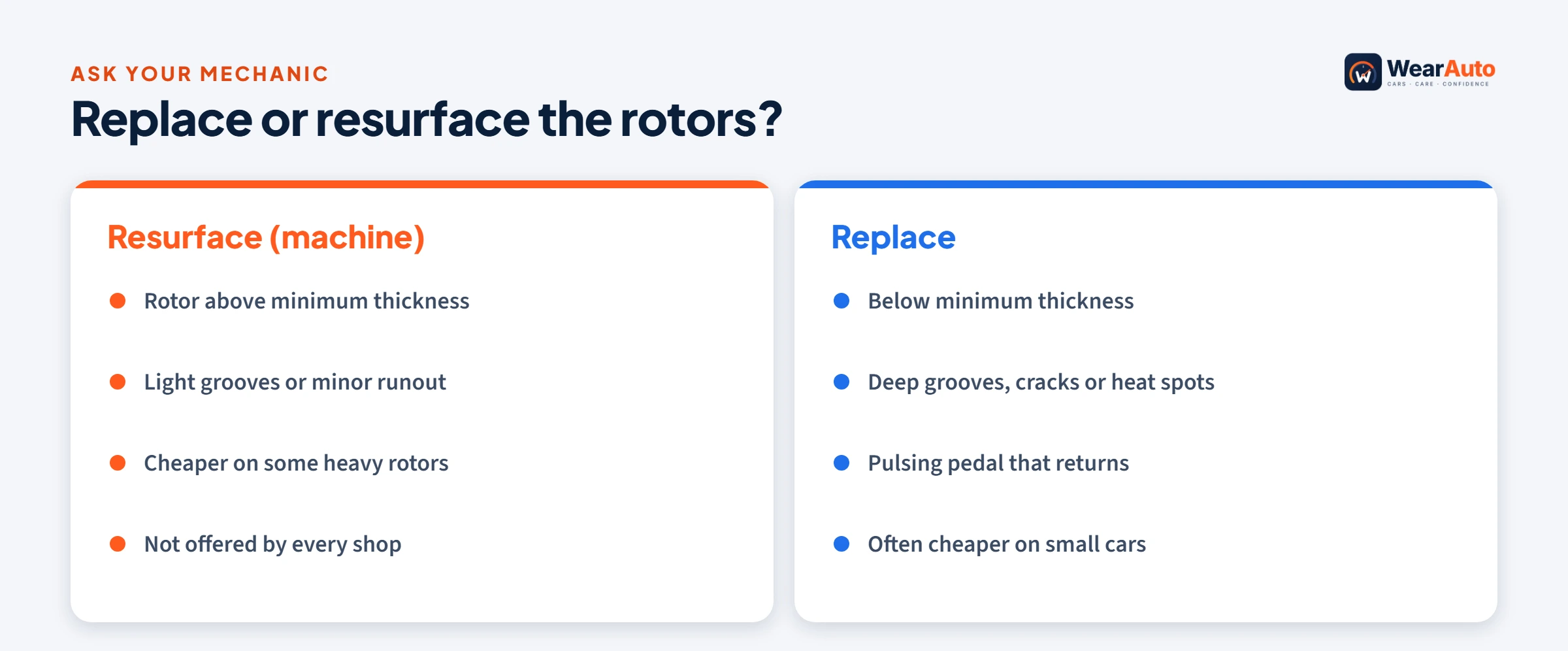
Rotors can sometimes be machined smooth instead of replaced, if they are still above the minimum thickness stamped on them. But many modern rotors are thin and inexpensive, so replacing them is often barely more expensive than resurfacing and gives a longer life. A pulsing brake pedal, deep grooves, or blue heat spots usually mean the rotors need replacing.
Signs You Need New Brake Pads
- A high-pitched squeal from the built-in wear indicator
- Grinding or growling, which means metal-on-metal contact
- Longer stopping distances or a soft pedal
- The car pulling to one side when braking
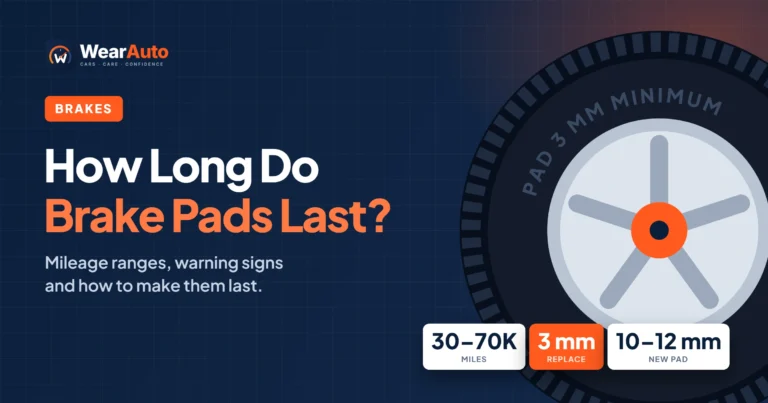
- Pad thickness below about 3 to 4 mm on inspection
- A brake warning light on cars with wear sensors
Grinding means stop soon
If you hear grinding, the pads may be worn down to the backing plate. That quickly damages the rotors, turning a $200 job into a $500 or larger one, and seriously reduces braking power.
DIY Brake Pad Replacement
Replacing pads is one of the more approachable DIY jobs for someone with basic tools, a torque wrench, and a safe way to lift the car. If you plan to try it, read our guide on how to jack up a car safely first.
You will typically need:
- A floor jack and jack stands
- A lug wrench and torque wrench
- A socket set and a C-clamp or caliper piston tool
- Brake cleaner and caliper grease
Brakes are safety-critical. If you are not confident, have a professional do the work.
How to Avoid Overpaying
- Get a written quote that lists pads, rotors, labor, and any extras separately.
- Ask to see the old pads and rotors, or for measurements.
- Compare two or three shops. Prices for the same job can differ by $100 or more.
- Ask about the warranty. Some pads come with lifetime warranties on the parts, though labor is extra.
- Watch for upsells. A brake fluid flush may be due, but caliper replacement should be backed by evidence like leaks or uneven wear.
Frequently Asked Questions
How much does it cost to replace all four brake pads?
Replacing pads on both axles typically costs $300 to $600 at an independent shop, or $600 to $1,200 including rotors. Dealers usually charge more.
Do I need to replace rotors every time I change brake pads?
Not always. If the rotors are above minimum thickness and not warped or deeply grooved, they can be reused or resurfaced. Many shops recommend replacing them for best results.
How long does a brake pad replacement take?
About one to two hours per axle at a shop. A DIY job may take two to three hours for a first-timer.
Are front brake pads more expensive than rear?
Front pads and rotors are usually larger and wear faster, so they often cost a little more. Rear brakes with electronic parking brakes can cost more in labor.
Why is the dealer so much more expensive?
Dealers usually charge higher hourly labor rates and use original equipment parts. The quality can be excellent, but independent shops often provide similar results for less.
The Bottom Line
Expect to pay about $150 to $300 per axle for brake pads at an independent shop, or $300 to $600 if the rotors also need replacing. Your vehicle, pad material, and shop type have the biggest effect on the price. Do not wait until you hear grinding, get itemized quotes, and you will keep both your brakes and your bill in good shape.
Keep reading
Free tools for this topic
Sources and further reading
- NHTSA: Vehicle maintenance and brakes
- Car Care Council: Brakes
- RepairPal: Brake pad replacement estimates
Written and fact-checked by the WearAuto Editorial Team. This guide is general information; always follow your vehicle manufacturer’s specifications and see a qualified mechanic for safety-critical repairs. See our editorial policy for how we research and update articles.